
Description
🤍 Brassavola glauca: Sculptural Elegance and Incomparable Night Perfume ✨
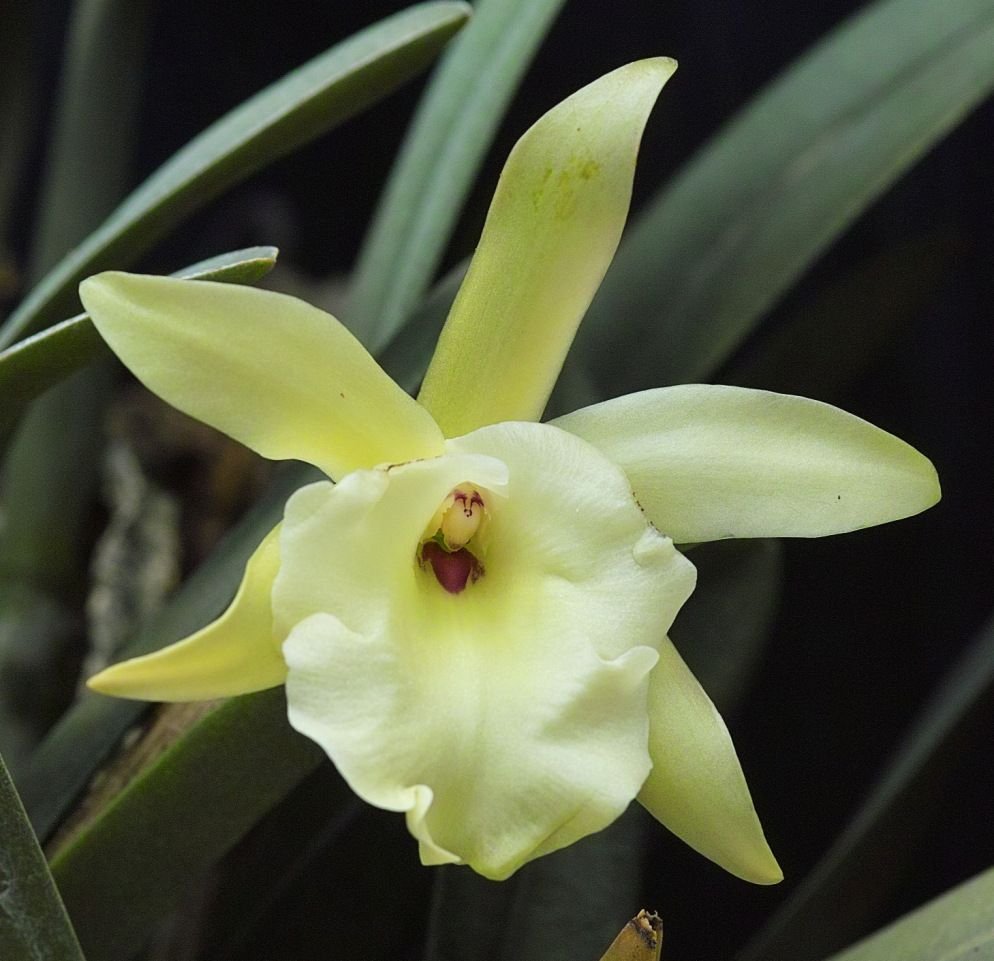
The Brassavola glauca (also classified by taxonomists as Rhyncholaelia glauca) is one of the noblest and most fascinating botanical orchids native to Central America. This species stands out for its rigid, blue-green (glaucous) foliage and, above all, for its large solitary flowers, featuring petals and sepals ranging from creamy white to pale green and a broad, velvety lip. Brassavola glauca is world-famous among orchid enthusiasts for its waxy texture and for exuding an intense, sweet fragrance during the night, designed by nature to attract nocturnal pollinators.
In fact, its compact appearance combined with the exceptional durability of its blooms makes Brassavola glauca a true gem for any exotic orchid collection. When cultivating Brassavola glauca, you will have an extremely robust plant with a high capacity to adapt to growing conditions in Portugal, developing with vigor both in pots with perfect drainage and mounted on natural cork or hardwood slabs.
✨ Main Characteristics of Brassavola glauca
- Large Waxy Flowers: Brassavola glauca produces individual flowers of thick, firm texture that remain flawless and vibrant for several weeks.
- Intense Night Perfume: During late afternoon and throughout the night, the flower emits an enveloping aroma reminiscent of citrus and vanilla.
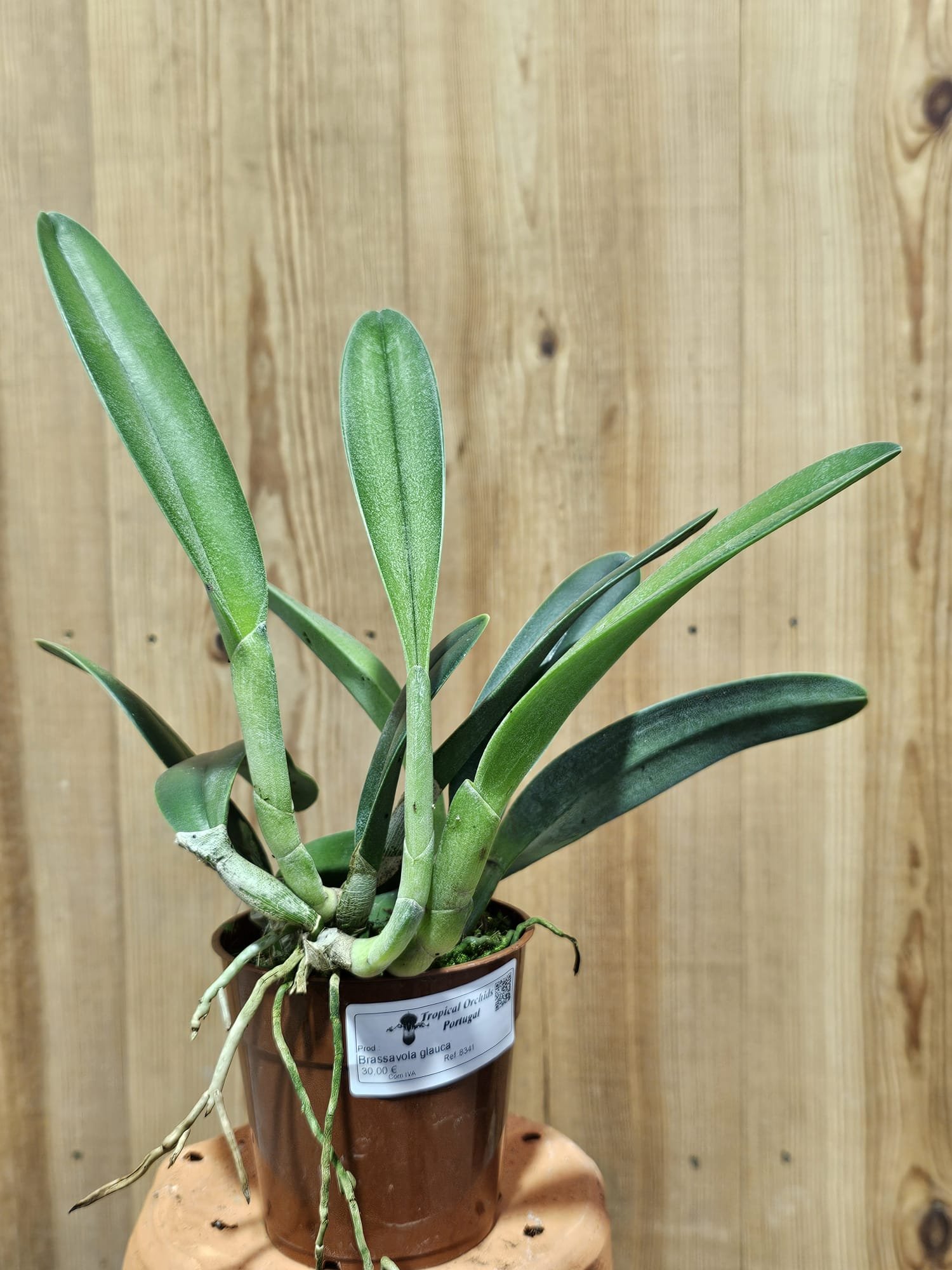
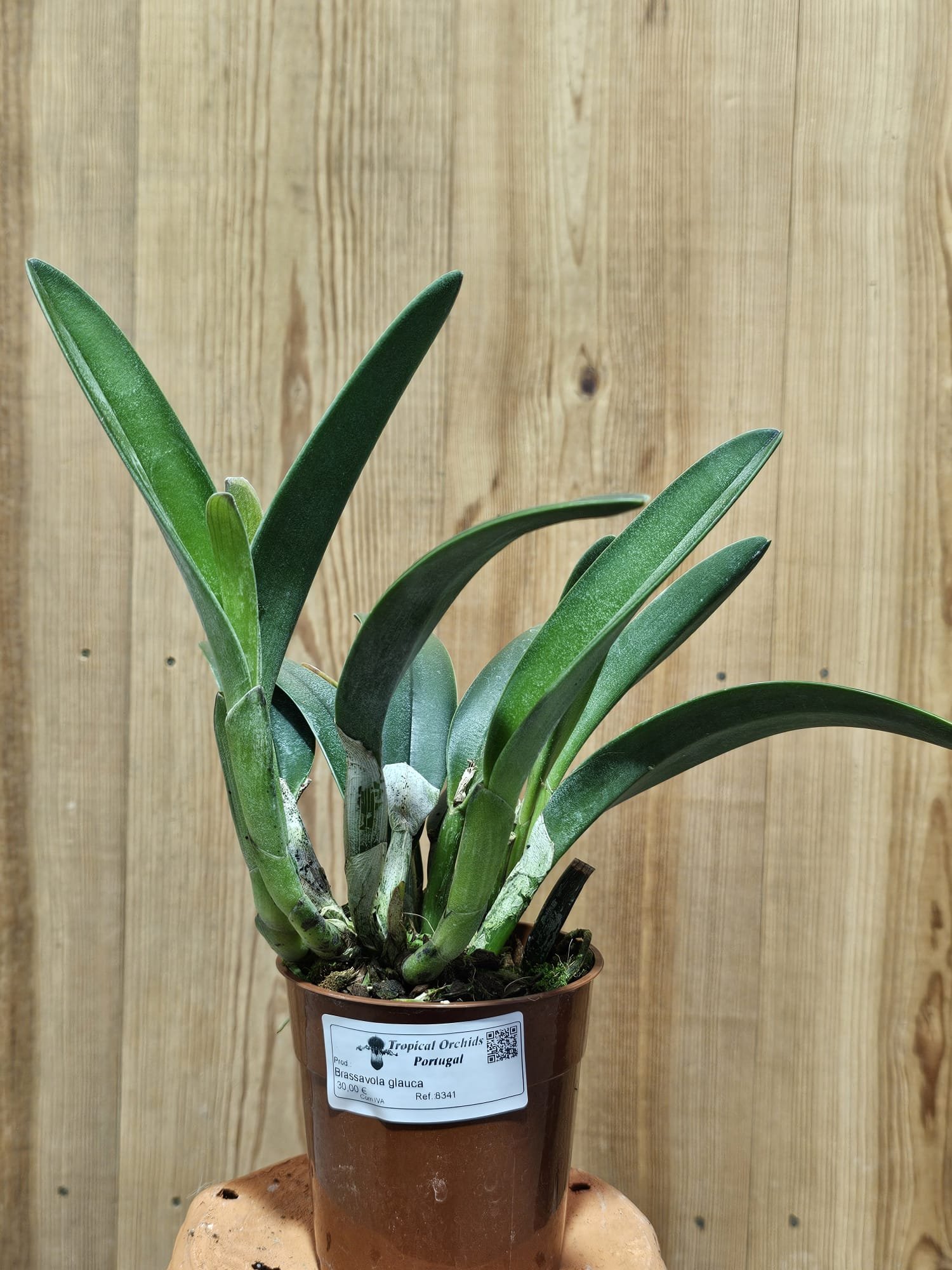
- Glaucous and Compact Foliage: Features short pseudobulbs and fleshy leaves with a characteristic gray-green coloration, perfect for storing water reserves.
- High Resistance and Vigor: It is an epiphytic and lithophytic species of simple cultivation, being quite tolerant to moderate periods of drought.
🌱 Practical Cultivation Guide for Brassavola glauca
To ensure that your Brassavola glauca grows healthy and produces spectacular blooms every year, it is essential to simulate its natural habitat with plenty of light and fast drying in the root system. Below, we summarize all the essential care requirements.
1. Ideal Lighting and Location
Brassavola glauca requires very bright and abundant light to induce flowering. Shading between 30% and 40% is recommended. It can receive direct morning sun or late afternoon sun. Glaucous foliage with slightly reddish edges indicates that the plant is receiving the ideal dose of light to emit new floral spathes.
2. Temperature and Ventilation
This species prefers intermediate to warm climates, developing ideally in temperatures between 16°C and 30°C. It will tolerate thermal variations and cooler nights in winter, provided it is kept in a well-ventilated environment with dry substrate. Air circulation is vital to maintain root health and prevent fungal growth.
3. Watering and Air Humidity
The golden rule in cultivating Brassavola glauca is to allow the substrate to dry completely between waterings. Its thick roots covered in velamen do not tolerate stagnant moisture. Water generously in spring and summer during the active growth phase and significantly reduce frequency in autumn and winter when the plant enters dormancy. Maintain a relative air humidity between 50% and 70%.
4. Substrate and Ideal Mounting
For pot cultivation, use a substrate with excellent drainage and aeration, composed of medium-grade pine bark and perlite, with a layer of sphagnum moss on the surface if the environment is very dry. Brassavola glauca also performs extraordinarily well when mounted on natural cork or solid wood slabs.
🧪 Nutrition and Recommended Fertilization
To support the development of strong pseudobulbs and ensure the appearance of large flowers, regular fertilization is indispensable. During the vegetative growth season in spring and summer, apply the specialized Orchid Focus Grow fertilizer diluted in irrigation water every two weeks. When new pseudobulbs reach maturity in late summer, switch to Orchid Focus Bloom to stimulate flower bud formation.
Discover our full range of high-quality nutrition in the orchid fertilizers and foliar nutrients section. For detailed information and botanical records on this and other species of the Laeliinae tribe, consult the Royal Horticultural Society (RHS).
Add Brassavola glauca to your collection and be amazed by the aroma and sculptural beauty of this unforgettable orchid!



Reviews
There are no reviews yet