


Description
🌸 Vanda testacea: The Delicate and Fragrant Asian Orchid ✨
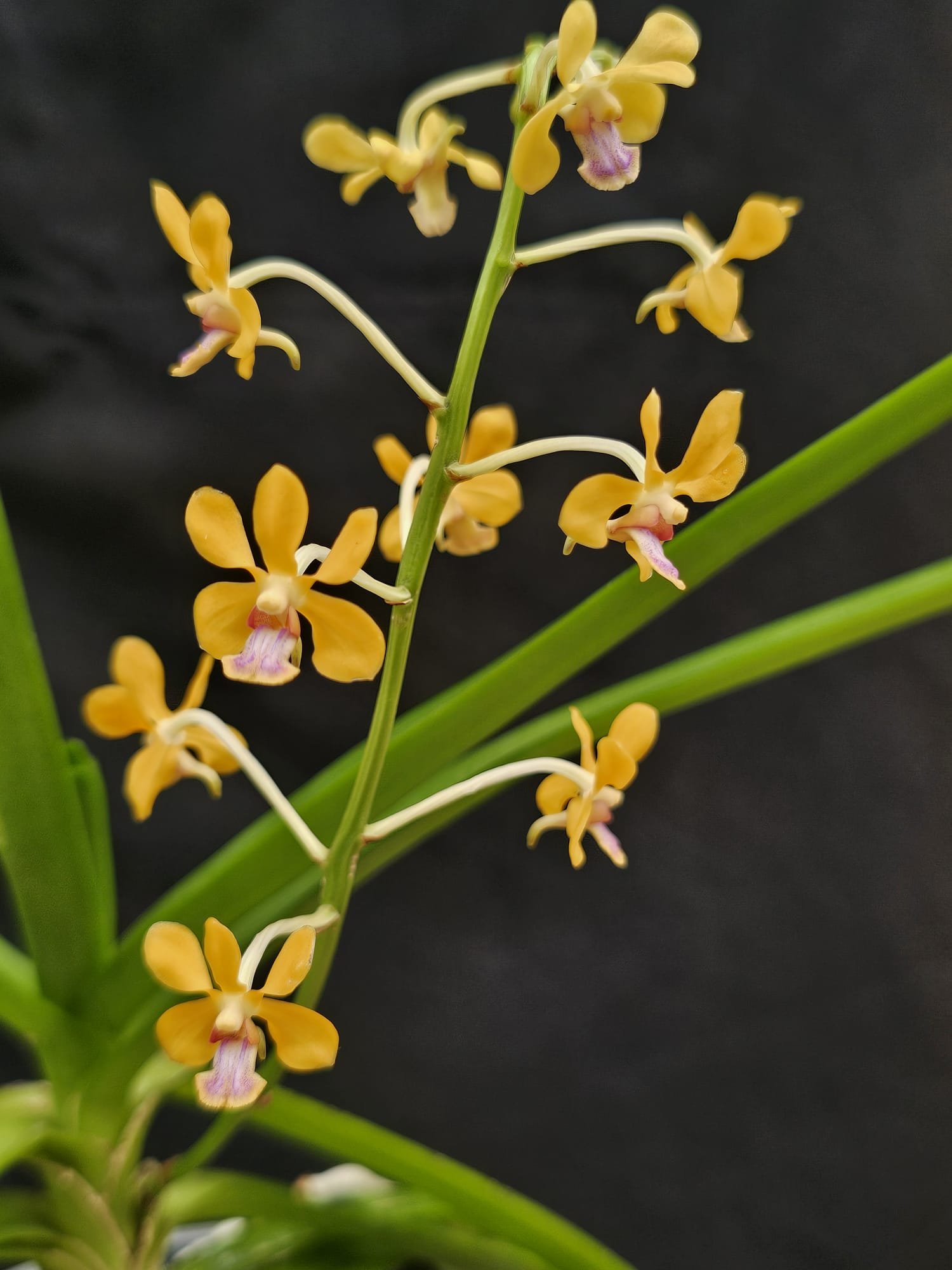
The Vanda testacea is a miniature botanical species of singular beauty, highly valued by rare orchid collectors worldwide. Native to the high-altitude regions of Asia, including India, Sri Lanka, Nepal, and Thailand, this species stands out for its graceful inflorescences and a very special golden-yellow tone. If you are looking for a compact, resilient plant capable of producing charming floral displays in your orchidarium, the Vanda testacea is an excellent addition to your collection.
Unlike large hybrid Vandas, the Vanda testacea features a much more contained and manageable plant habit. Furthermore, its flowers emit a sweet, gentle fragrance during the brightest hours of the day. For this reason, cultivating this botanical treasure in Portugal allows you to enjoy the authenticity of a wild orchid with fantastic floral durability and an impressive visual impact.
✨ Key Features of Vanda testacea
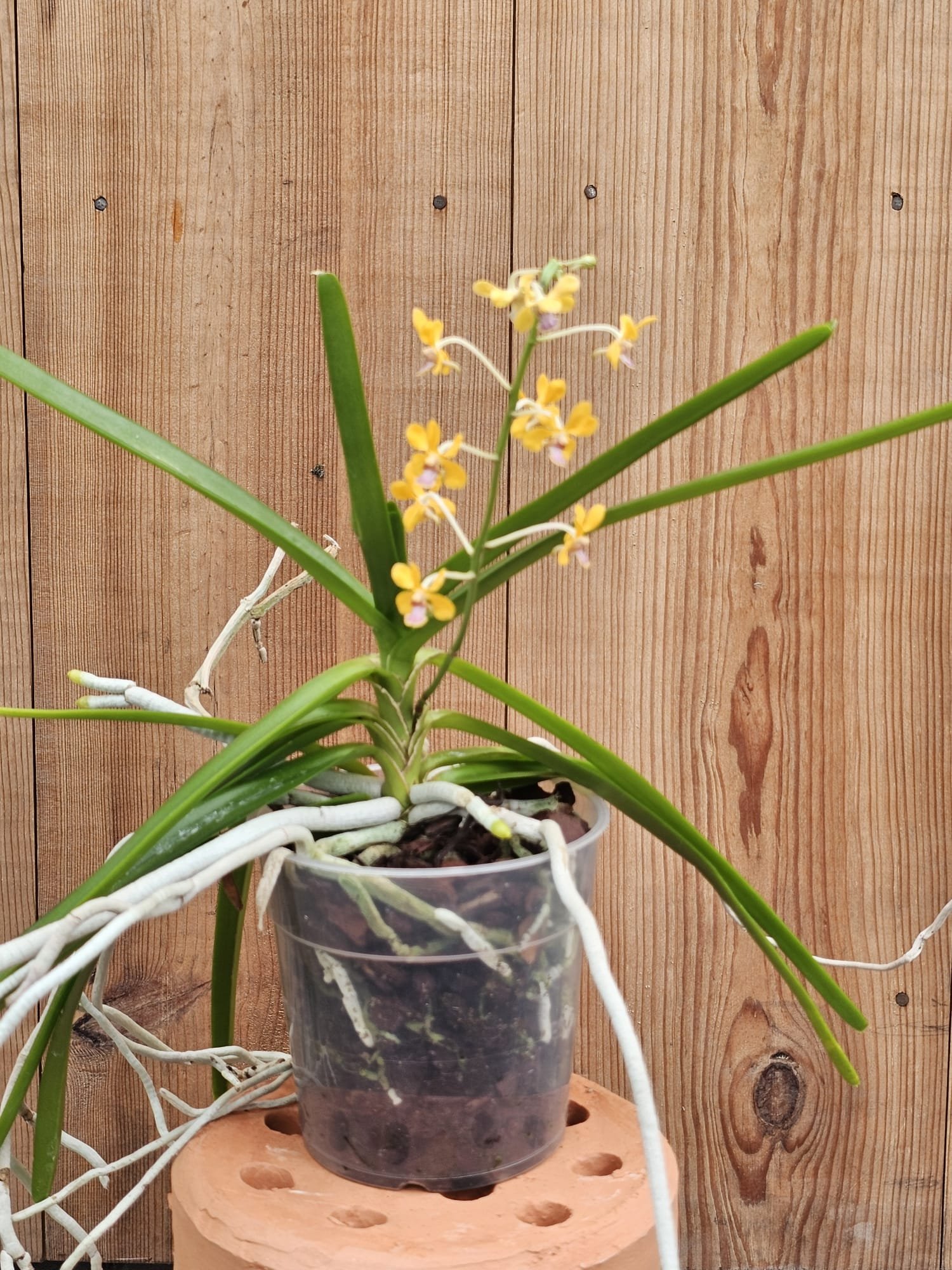
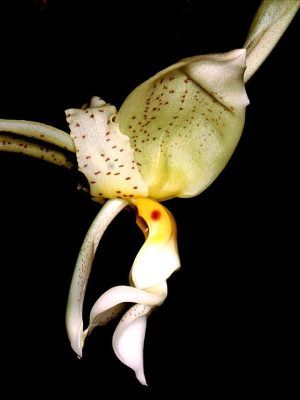
- Golden and Elegant Flowers: Produces erect spikes supporting dozens of small cream-yellow to golden flowers, highlighted by violet or bluish lips that create a vibrant contrast.
- Soft Fragrance: During the day, the flowers release a pleasant scent that delicately perfumes the surrounding space.
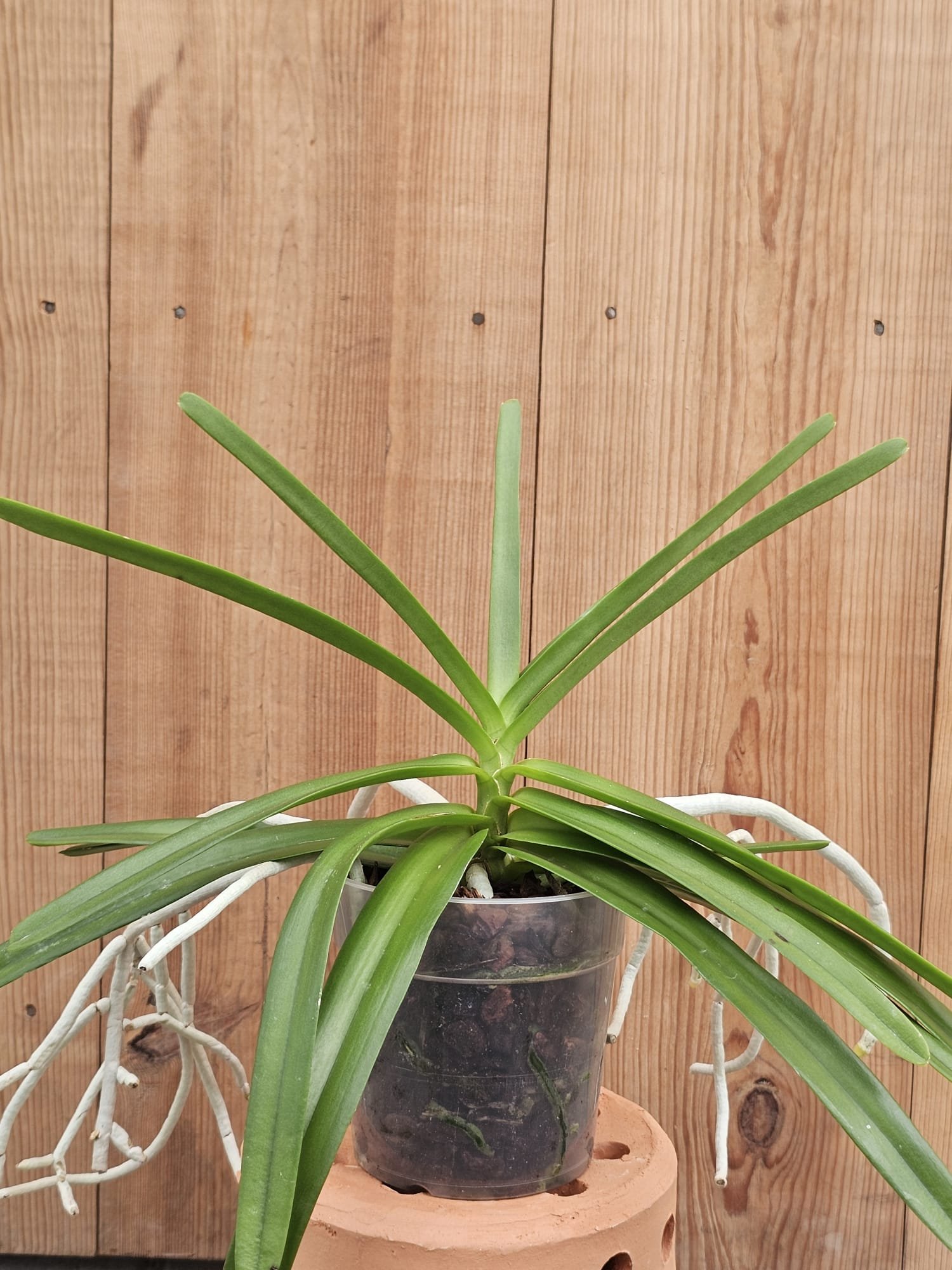
- Compact Fan-Shaped Growth: Features leathery leaves arranged in a dense, compact fan, making it perfect for those with limited space in the orchidarium or greenhouse.
- Vigorous Aerial Roots: Develops a strong, velamen-covered aerial system, ideal for absorbing air moisture quickly and efficiently.
🌱 Practical Cultivation Guide for Vanda testacea
To ensure your Vanda testacea grows healthy and blooms abundantly every year, it is essential to provide conditions that simulate its natural environment in mountain tropical forests.
1. Ideal Lighting and Location
The Vanda testacea requires bright, filtered light to develop and bloom vigorously. The ideal is to maintain about 40% to 50% shading. In fact, direct sunlight during the hottest hours of the day should be avoided to prevent foliage burns. Leaves with a slightly yellowish light-green tone indicate the plant is receiving the right amount of light.
2. Temperature and Ventilation
This species adapts very well to intermediate to warm climates, developing ideally in temperatures between 18°C and 30°C. Good air circulation is fundamental for Vandas; therefore, keep the location well-ventilated to ensure the aerial roots dry quickly after watering.
3. Watering and Air Humidity
As a typically epiphytic orchid with bare roots or grown in suspended baskets, the Vanda testacea appreciates frequent watering. During spring and summer, water daily by misting the roots well until they turn completely green. In winter, reduce the frequency, allowing the roots to dry completely. The ideal relative air humidity should be between 60% and 80%.
4. Mounting and Substrate
This orchid develops spectacularly when grown mounted on cork, wooden plaques, or in wooden/plastic baskets without substrate. If you prefer using a pot, choose a very well-aerated container with large-grade pine bark or spaced sphagnum moss, ensuring air circulates freely among the roots.
🧪 Nutrition and Fertilization for Incredible Blooms
Vanda orchids are plants with active growth-period nutrition. Apply a well-balanced soluble foliar fertilizer every two weeks during spring and summer. To choose the best options for your plant’s health, check our range of orchid fertilizers.
To check registration data and the official taxonomy of this botanical species, you can consult the database of the Royal Horticultural Society (RHS).
Add the Vanda testacea to your space today and discover the fascination of growing one of the most beautiful botanical mini-Vandas in the world!


Reviews
There are no reviews yet