Cambria Orchids
Cambria Orchids: 7 Growing Secrets for the Iberian Peninsula
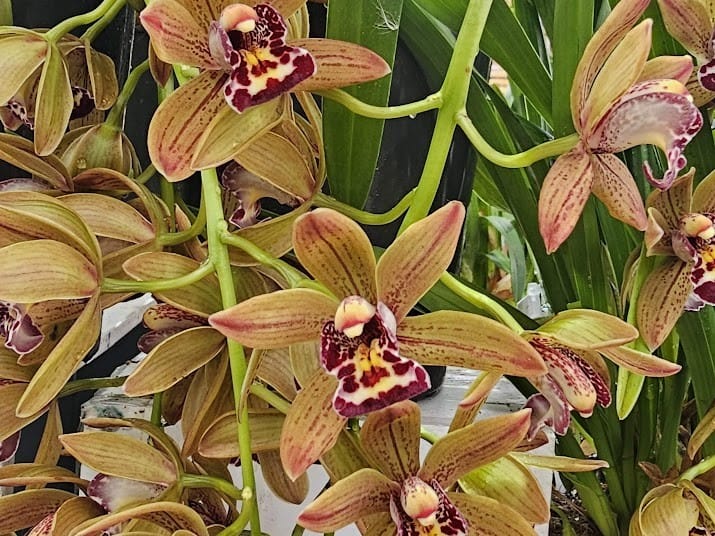
Cambria orchids hold a prominent place in orchid lovers' collections thanks to their vibrant colours and exotic shapes. In fact, the term "Cambria" does not refer to a natural botanical genus, but is a trade name for a broad alliance of hybrids from the subtribe Oncidiinae. If you want to succeed with Cambria orchids, this complete guide reveals everything about the ideal watering, light, temperature and substrate for Iberian microclimates.
📋 Cambria Orchids Fact Sheet
| Parameter | Botanical and Growing Details |
| Trade Name | Cambria Orchids (Oncidiinae / Odontoglossum alliance) |
| Origin of Ancestors | Central and South America (high-altitude tropical forests) |
| Growth Type | Sympodial (produces fleshy pseudobulbs) |
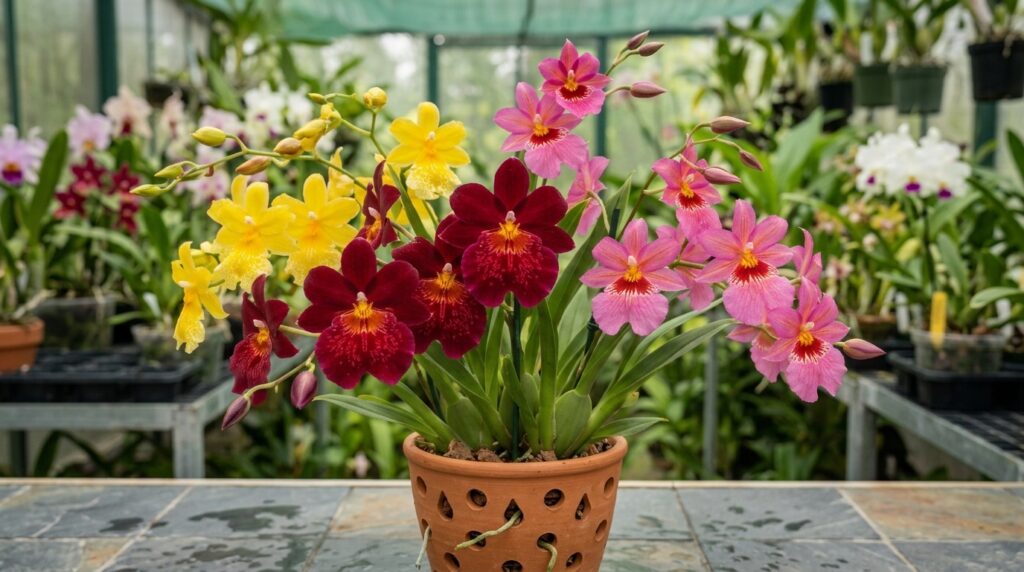
| Flower Colours | Variations of red, burgundy, yellow, pink and white |
| Flowering Duration | 4 to 6 weeks |
| Light | Medium, filtered light (no intense direct sun) |
🌸 What Are Cambria Orchids and How Do They Grow?
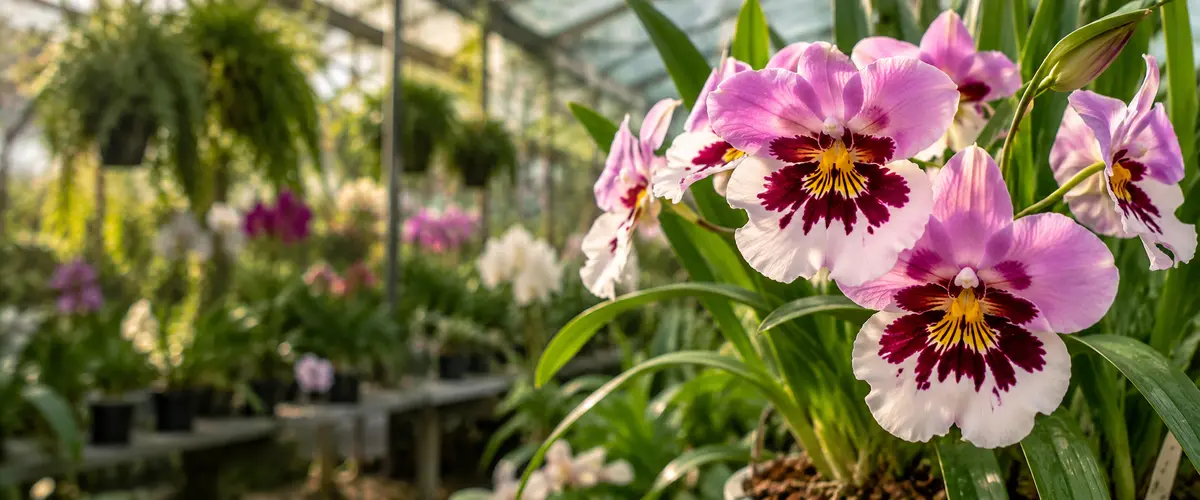
First of all, the genetics of Cambria orchids combine the best characteristics of genera such as Odontoglossum, Oncidium, Miltonia and Brassia. For this reason, these plants show remarkable resilience and a great diversity of flower patterns.
In addition, Cambria orchids have a sympodial growth habit. Consequently, the plant develops ovoid pseudobulbs that store the water and nutrients needed to sustain future flower spikes. To learn about other exotic, pure species with a fascinating shape, also explore our article on Phalaenopsis bellina.
🌿 7 Steps to Growing Cambria Orchids Successfully
1. Suitable Light
Cambria orchids need plenty of light, but always indirect and filtered. Therefore, avoid exposure to direct sun during the hottest hours of the day so as not to scorch the leaf tissue.
2. Temperature Control
These plants prefer intermediate to cool temperatures, ideally between $15^circtext{C}$ and $24^circtext{C}$. However, they tolerate small variations if the air humidity is balanced.
3. Watering without Waterlogging
When it comes to watering, Cambria orchids like the substrate to be slightly moist. So, water generously as soon as the top layer in the pot starts to feel dry to the touch.
4. Choosing the Substrate and Pot
To ensure excellent root drainage, use medium-fine grade pine bark combined with perlite and sphagnum. Additionally, planting in perforated clay pots promotes ideal aeration of the roots and prevents rot.
5. Regular Feeding
During the active growth phase in spring and summer, apply a balanced orchid fertiliser every two weeks at a diluted strength.
6. Air Circulation
Maintain constant ventilation around your Cambria orchids to prevent fungi or bacteria from developing on the leaves.
7. Repotting at the Right Time
Repot the plant every two years, preferably in spring, when the new vegetative shoots appear.

🇪🇸 🇵🇹 Adapting Cambria Orchids to the Iberian Peninsula
Growing Cambria orchids varies depending on the geographical region of the Iberian Peninsula, owing to differences in temperature and humidity:
- Atlantic and Northern Zone (Northern Portugal and Galicia): The climate is naturally favourable. However, protect your Cambria orchids from excessive rain in winter.
- Continental and Inland Climate (Madrid and Inland Alentejo): As the air is dry, use humidifiers and protect your Cambria orchids from extreme summer heat and from heating in winter.
- Mediterranean and Southern Zone (Andalusia and the Algarve): Increase watering and provide strict shading during the hot months of the year.
To consult botanical data and international classifications on the Oncidiinae alliance, you can visit the database of the Royal Horticultural Society (RHS) or consult the American Orchid Society (AOS).
💡 How to Diagnose Problems in Cambria Orchids
The appearance of the foliage and pseudobulbs reveals the health of your Cambria orchids:
- Very wrinkled pseudobulbs: These indicate a lack of water or loss of roots due to overwatering in the past.
- "Accordion" leaves: When new leaves emerge folded in a zigzag, it indicates that the air humidity was too low while they were forming.
❓ Frequently Asked Questions (FAQs)
1. How do I get Cambria orchids to flower again?
Providing good indirect light and a slight difference in temperature between day and night in autumn encourages new flower spikes to appear.
2. Should I cut the spike of Cambria orchids after flowering?
Yes. Once all the flowers have wilted and the spike has dried out, cut it close to the base of the pseudobulb, as that spike will not produce flowers again.
🟢 Conclusion
Growing Cambria orchids is a rewarding experience and accessible to any collector in the Iberian Peninsula. By following the watering, substrate and light care advice set out here, your Cambria orchids will thrive and flower vigorously every year. Visit our online orchid shop to discover new varieties and growing supplies.