Bulbophyllum
Bulbophyllum falcatum€22.00

Talk to us to find out when it is back, or let us suggest an alternative.
Fornecida sem substrato
Planta importada do Brasil de acordo com as normas fitosanitárias estabelecidas pela DGAV
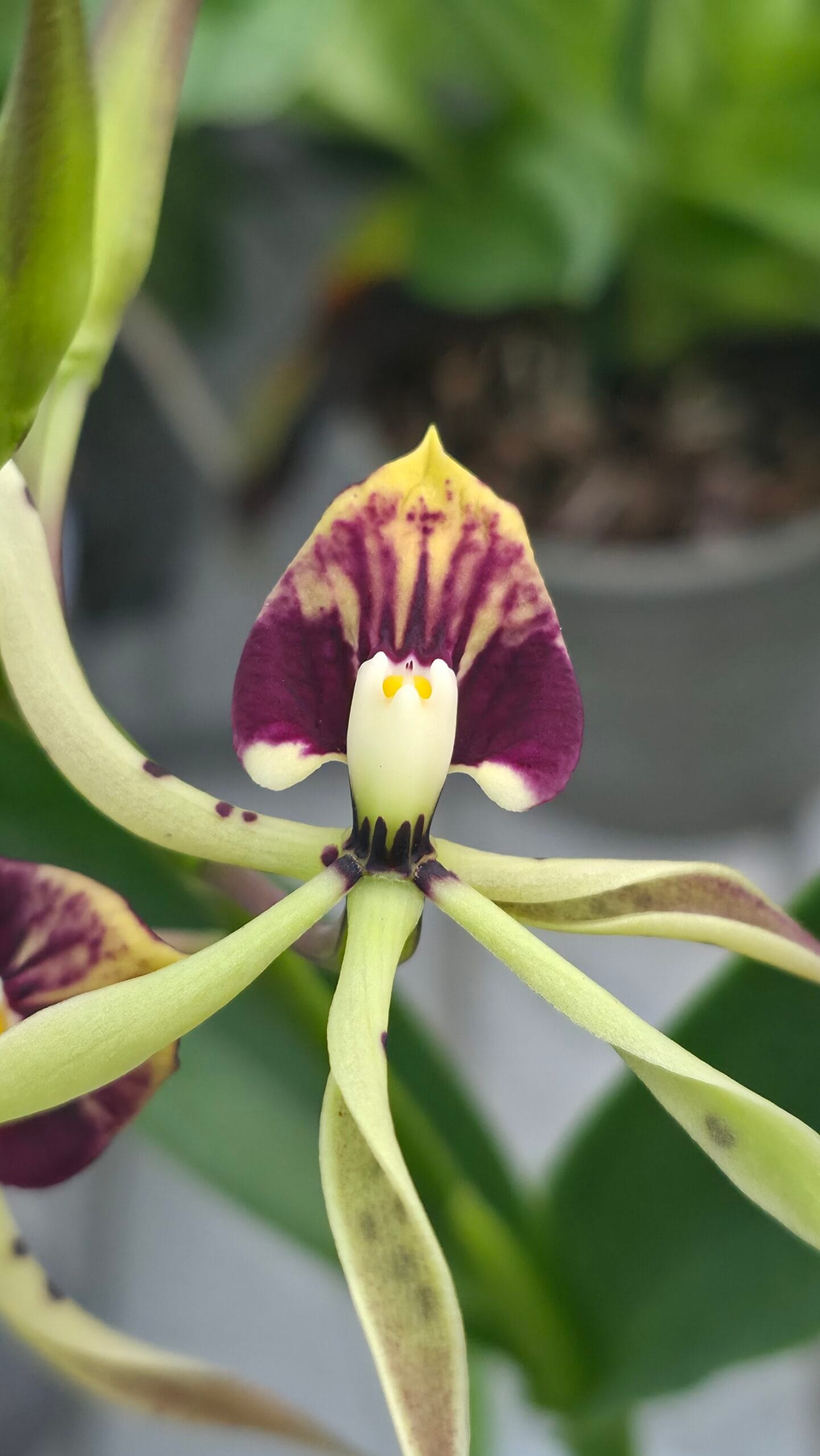
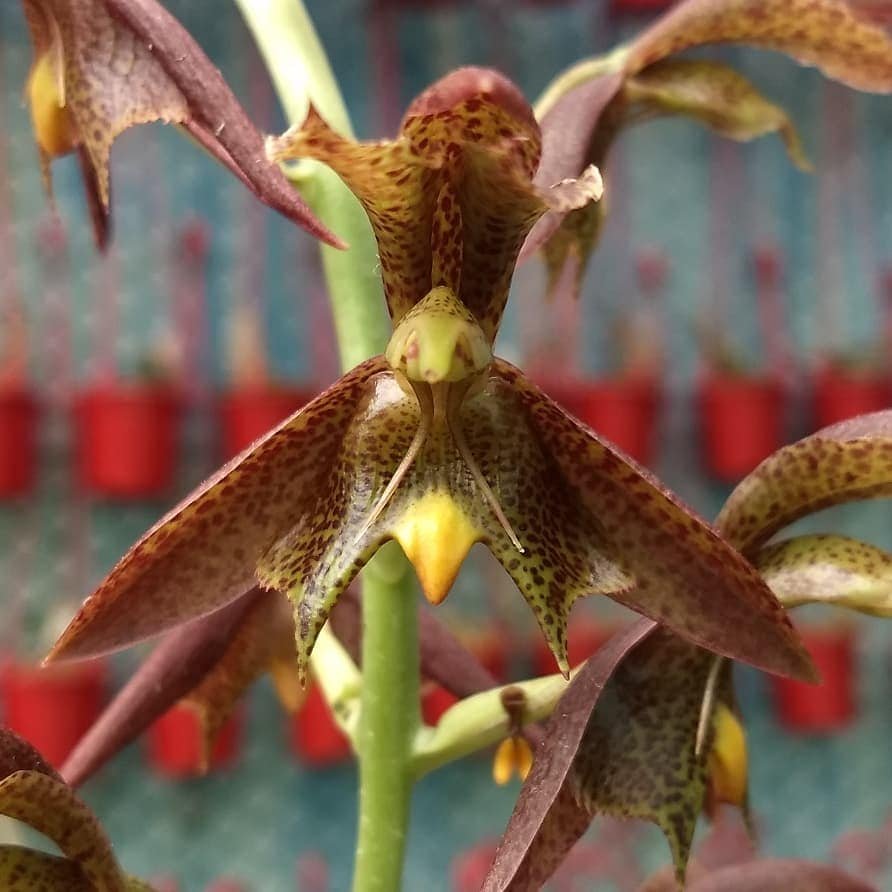
The genus Catasetum, whose orchids have a slightly unusual growth habit, are sympodial plants with very large, thick pseudobulbs covered by a layer of light brown bracts.
After flowering, their leaves fall and they enter a dry rest until they start growing again and their roots are at least 5 cm long.
During this period, water only the minimum necessary, just enough to stop the pseudobulbs from shrivelling. If you water more than that, the plant may rot and die.
When they flower, they will produce several flower spikes per pseudobulb, each with multiple flowers. Healthy orchids will develop larger pseudobulbs with more flowers over time.
They like medium to high light, somewhere between 1500 and 3000fc (if you don't know how to measure light, I explain this and much more in my e-book). To make it easier, medium light is slightly more than what is recommended for Phalaenopsis, and high light is the same as what is recommended for Cattleyas.
Catasetum orchids grow well at temperatures between 21 and 27ºC during the day, with a drop of approximately 6 to 8ºC at night.
Try to provide humidity between 50 and 70%.
When they are in active growth, water generously, as they grow very quickly and need this. Avoid letting the substrate dry out completely. When the leaves fall after flowering (there may be several flowerings before this happens), stop watering until new growth appears again.
News from our greenhouse in Fernão Ferro, for people who grow with passion.
By subscribing, you accept our Privacy policy. You can unsubscribe at any time.