Bulbophyllum
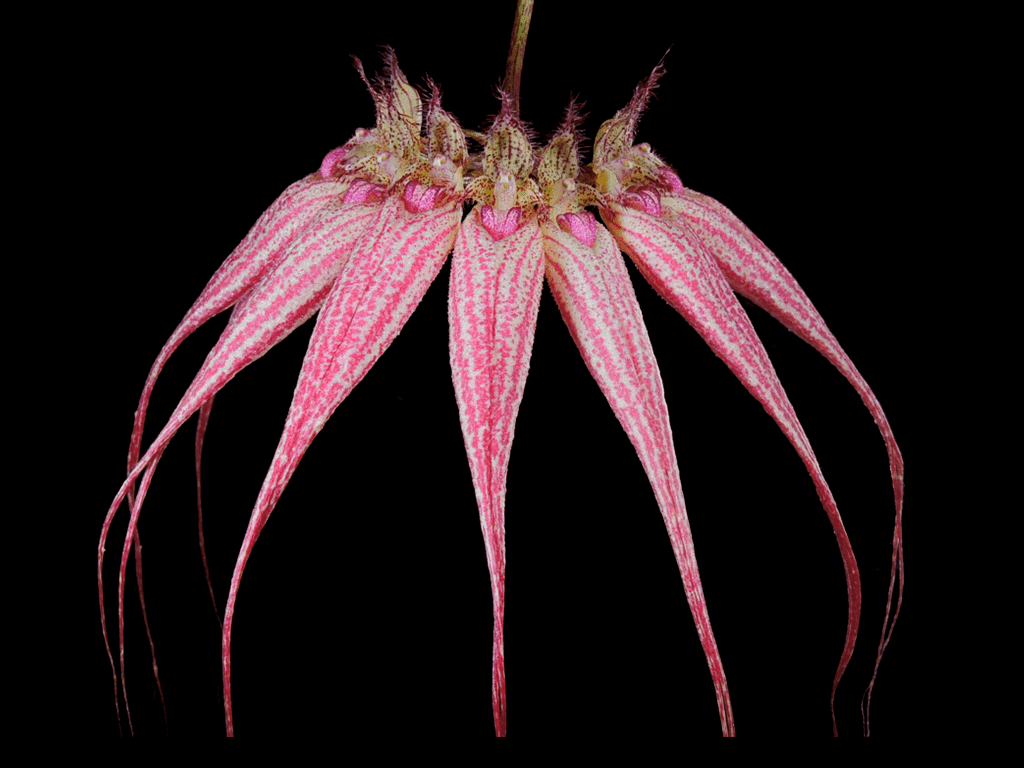
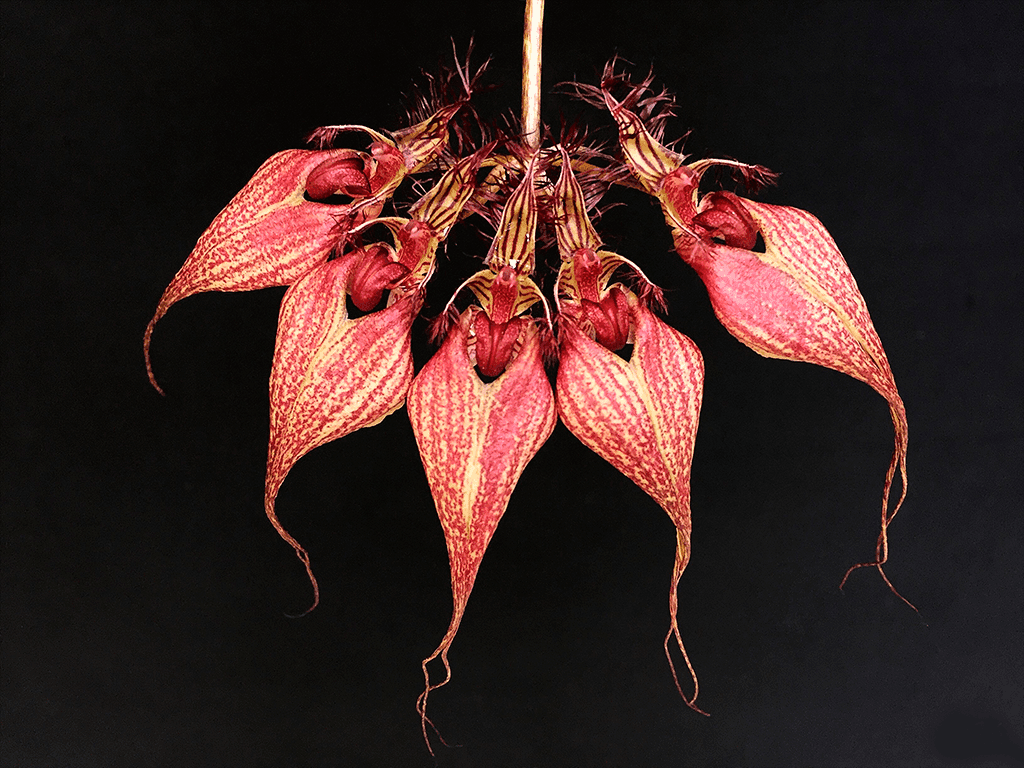
Bulbophyllum rothschildianum€25.00

Talk to us to find out when it is back, or let us suggest an alternative.
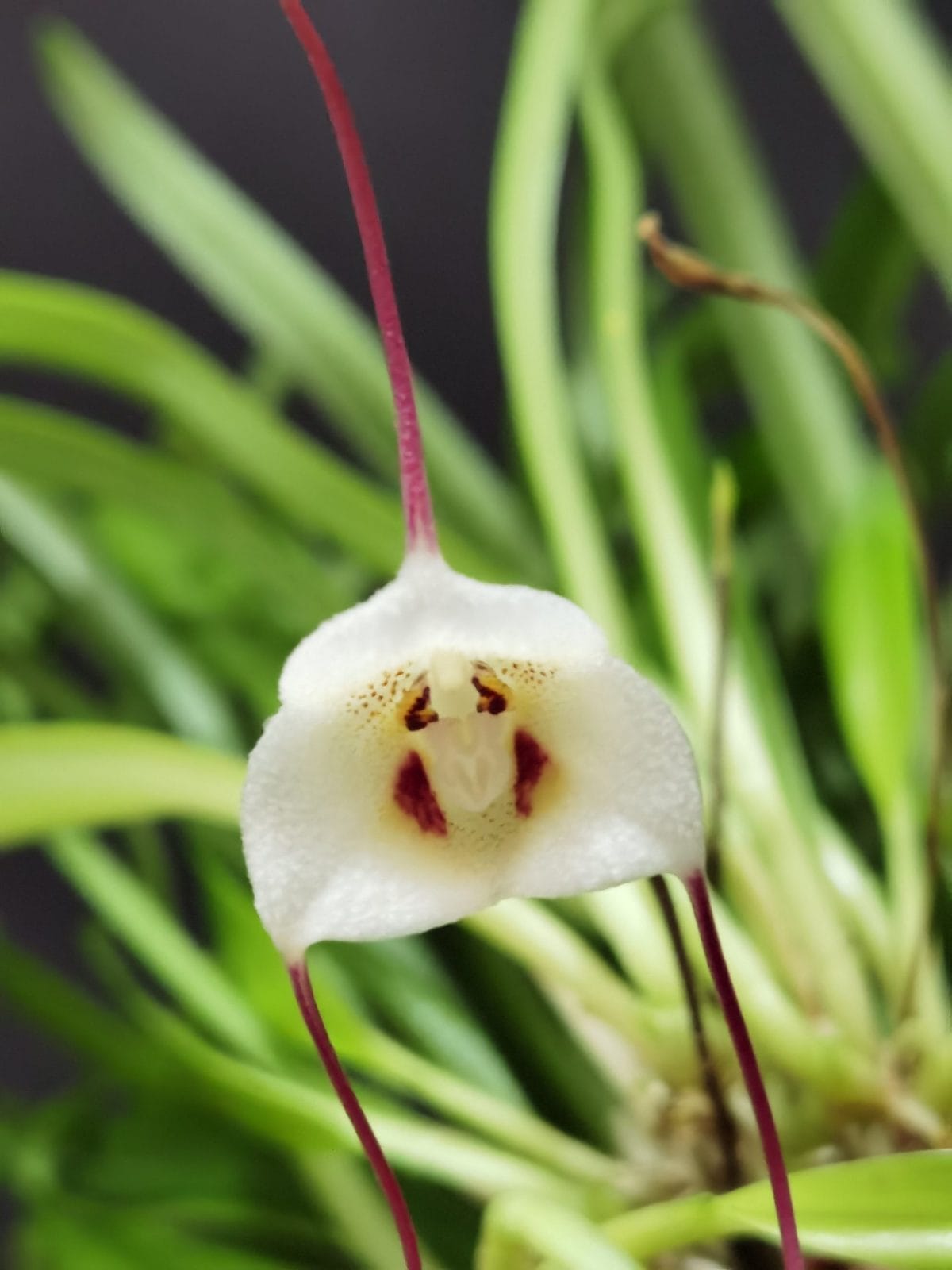
The Dracula lotax is an absolutely extraordinary miniature orchid, native to the misty, high-altitude cloud forests of Ecuador and Peru. Highly sought after by collectors of exotic orchids because of the unique appearance of its flowers, this small epiphytic species stands out for its white petals and sepals with a velvety texture, thin, elongated tails and a reddish-brown centre that curiously resembles the shape of a small animal face. It is one of the most graceful and appreciated representatives of the genus Dracula.
Unlike many other species of the same genus, which produce downward-hanging stems, the Dracula lotax stands out for sending up its flower spikes erect or slightly ascending, which makes it much easier to grow in small pots or hanging baskets. Its fine, dense foliage forms compact, very attractive clumps, making it a perfect choice for vivariums, terrariums and collections of cool-climate orchids.
To ensure that your Dracula lotax grows vigorously, keeps healthy foliage and flowers regularly, follow this strict set of growing recommendations for cloud forest orchids.
The Dracula lotax lives in the dense understorey of humid high-altitude forests, where direct sunlight rarely reaches. For this reason, it needs moderate to heavy shade (around 70% to 80% shading). Never expose this plant to direct sun, as its thin leaf tissues burn extremely easily. Soft, indirect lighting, equivalent to that received near north-facing windows or in a cool, shaded corner of the orchid house, is ideal.
This species enjoys cool to intermediate temperatures, growing best with daytime temperatures between 16°C and 22°C and night-time temperatures between 10°C and 14°C. Environments that are too hot and dry cause heat stress and premature bud drop. Constant, gentle, humid air circulation is essential to keep the leaves fresh and prevent fungal problems without dehydrating the plant.
Like all orchids of the genus Dracula, the Dracula lotax has no pseudobulbs to store water. Therefore, the substrate must be kept evenly moist all year round, never drying out completely between waterings. Use water of excellent quality, preferably reverse osmosis, rainwater or demineralised water with very low electrical conductivity. Always keep the relative humidity high, ideally between 75% and 90%.
The substrate for the Dracula lotax should retain moisture constantly without compacting the fine roots. The ideal choice is a mix of high-quality sphagnum moss and fine-grade pine bark to ensure aeration. It can be grown in small plastic pots, clay pots or mounted on natural cork bark, as long as a generous layer of sphagnum moss is applied when mounting and daily watering is ensured.
Being a species sensitive to the build-up of mineral salts in the roots, the Dracula lotax requires very gentle but constant feeding during the vegetative growth period.
During the development of new leaves and roots, apply Orchid Focus Grow fertiliser every two weeks or every three weeks at a highly diluted dose (a quarter of the recommended dose). This gentle feeding provides the elements needed to form dense, resilient clumps.
To encourage the production of flower spikes and strengthen the buds, gently alternate with Orchid Focus Bloom. Its balanced formula strengthens the flower structure without burning the delicate roots of this miniature.
Discover our whole range of specialised plant nutrition in the orchid fertilisers category. To deepen your taxonomic and botanical knowledge of this species, consult the official database of Plants of the World Online (Kew Science).
Add the unusual and graceful Dracula lotax to your collection today and be amazed by the fascination of tropical micro-orchids!
News from our greenhouse in Fernão Ferro, for people who grow with passion.
By subscribing, you accept our Privacy policy. You can unsubscribe at any time.