Bulbophyllum
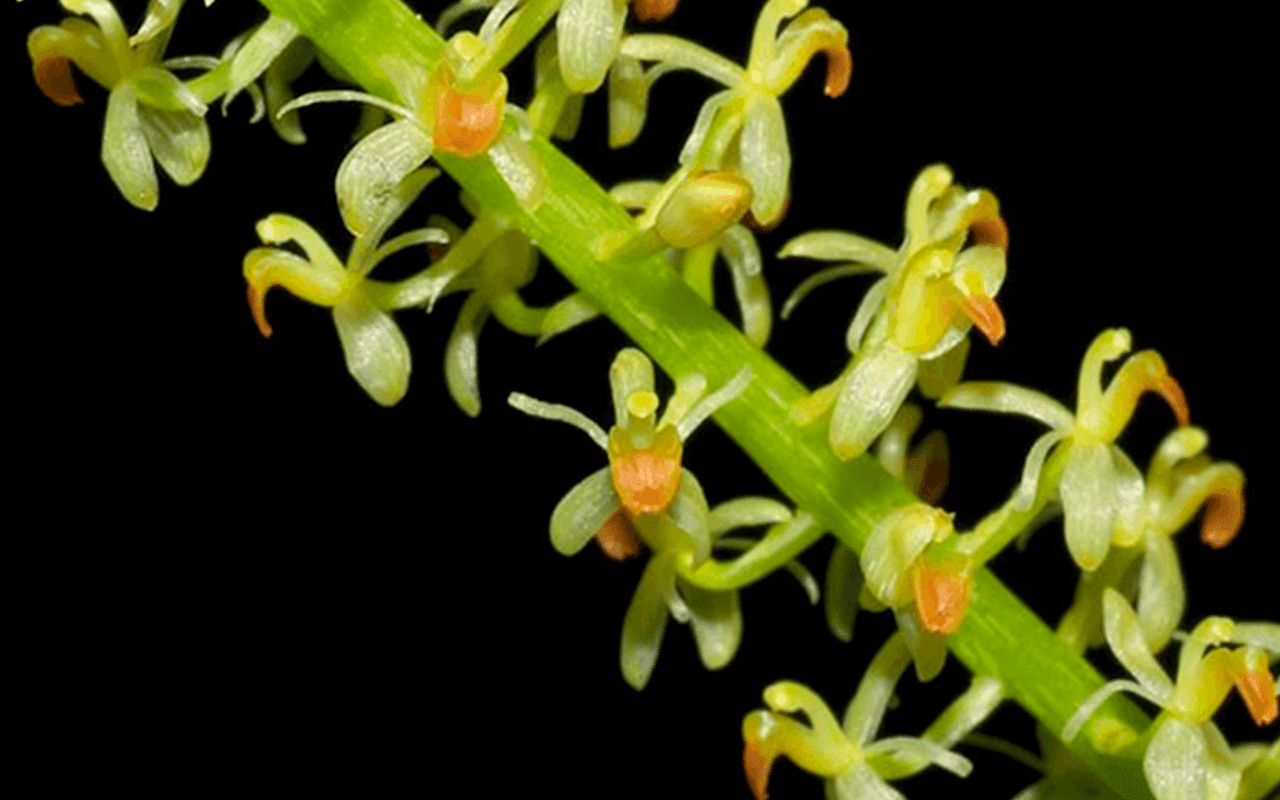
Bulbophyllum falcatum€22.00


Talk to us to find out when it is back, or let us suggest an alternative.
It is a terrestrial or lithophytic orchid, grown for its ornamental foliage and flowers, but it stands out mainly as a groundcover in shaded spots, unlike the vast majority of orchids, which are known as pot plants.
It has no pseudobulbs and its rhizomes are initially erect, but become curved and prostrate at the base as they grow. The leaves are oval to elliptical, glossy and beautifully bronzed, with longitudinal veins that are silver to coppery depending on the variety. There is also an albino variety, with light green leaves and only a slight coppery tint on the underside.
Should be grown in shade of 80% to 90%
Provide a temperature of 15 to 23ºC during the day, with a drop of 6 to 8ºC at night, i.e. they prefer a relatively cool temperature.
It flowers in late winter and early spring, sending up long, erect flower stalks with small, fleshy, delicate white flowers with a small yellow blotch. The flowering is long-lasting and lasts about two weeks
Mixed compost for lithophytes and epiphytes, i.e. very free-draining, containing stones, but with materials that retain water well, such as broken coconut husk, pine bark, charcoal, topsoil, etc. When planting as groundcover, or in beds, it is advisable to mix coarse sand and topsoil into the soil and even more premium materials such as coir fibre, vermiculite, peat, sphagnum, etc., thus improving the environment for root development. It does not tolerate heavy or waterlogged soils, rotting quickly. Water frequently in spring and summer and reduce watering in autumn and winter, when the plant enters dormancy.
Feed fortnightly, only during the warm months and as soon as the first signs of growth appear, at the end of winter. It multiplies easily by dividing the rooted clumps and cuttings, and more rarely by seed.
Keep the plants in shade with moderate light.
Like most orchids, they prefer humidity around 70%. If you grow them on a windowsill, you may need to place them on a humidity tray.
They do not like to dry out, so water them as they approach dryness. These orchids love air around their roots, so use a compost mix that will not suffocate them; you can place pieces of broken roof tile in the middle so there are gaps for air to circulate.
The most important advice, then, is to provide cool temperatures by day and by night, plenty of air circulation around the roots, and not to let them dry out, except during their dry resting period. Doing so, they will thrive.
News from our greenhouse in Fernão Ferro, for people who grow with passion.
By subscribing, you accept our Privacy policy. You can unsubscribe at any time.