Mediocalcar decoratum: A Charming Little Orchid for Collectors
Description:
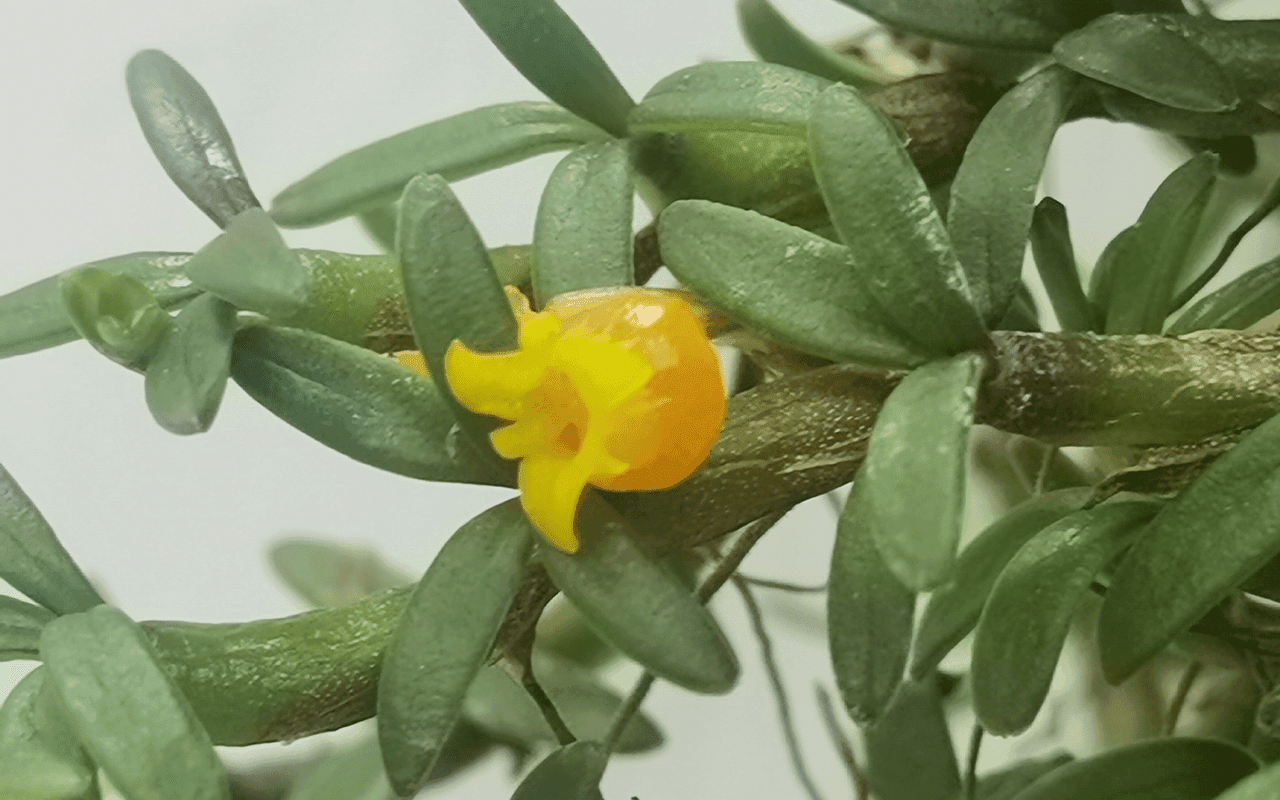
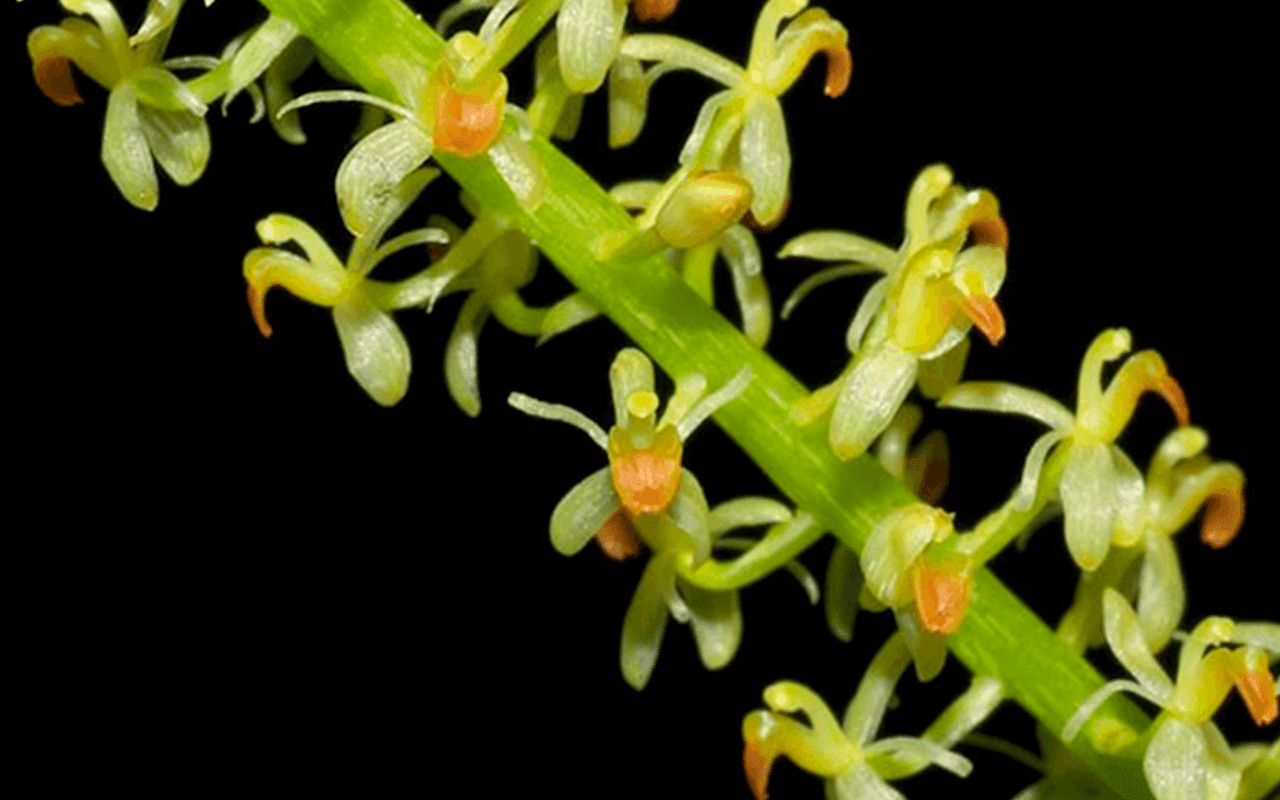
The Mediocalcar decoratum is an epiphytic miniature orchid native to New Guinea and Papua. Prized for its compact size, succulent foliage and delicate flowers in shades of orange and yellow, this rare and unusual orchid is a special addition for experienced collectors and lovers of exotic miniatures.
Features:
- Miniature size: Mature plants typically reach 5 to 10 cm in height, making them ideal for terrariums, small pots or compact collections.
- Light: Filtered light to light shade. Avoid harsh direct sunlight.
- Temperature: Mild to warm temperatures (between 18°C and 28°C).
- Humidity: High humidity (between 70% and 80%).
- Watering: Water moderately when the substrate is nearly dry. Allow the top of the substrate to dry slightly between waterings. Avoid waterlogging.
- Feeding: Use a specialist orchid fertiliser diluted every few weeks during the growing season (spring and summer).
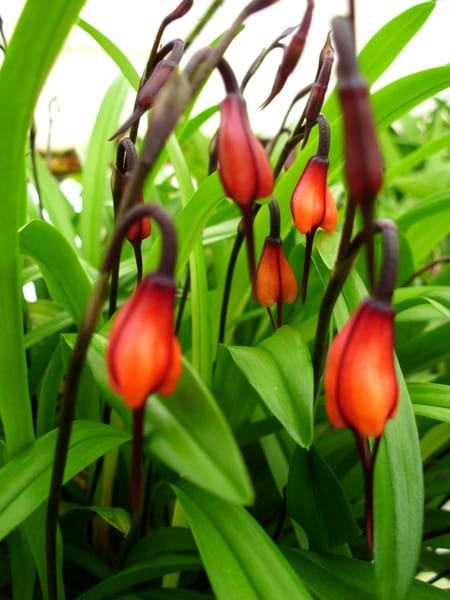
- Flowering: Flowers throughout the year, producing short inflorescences with a few flowers that resemble lanterns in orange and yellow.
Care:
- Mediocalcar decoratum needs a pot with wide drainage holes to ensure water drains away. Use well-aerated substrates that retain moisture, such as small pine bark, chopped sphagnum or a specialist mix for miniature orchids.
- Provide filtered light, avoiding direct sun, especially during the hottest hours of the day. A bright but sheltered spot is ideal.
- Water with moderation, checking the substrate. Allow the top to dry before watering again. Avoid waterlogging, which can lead to root rot.
- High humidity is crucial for this orchid. Use humidifiers, pebble trays or group plants together to increase the humidity around them.
- Fertilise during the growing season to encourage continuous flowering.
Tips:
- Mediocalcar decoratum is recommended for growers with experience with orchids due to its miniature size and specific humidity needs.
- Mounting on cork plaques covered with sphagnum moss can be an interesting growing method for this species, provided humidity is kept high.
- Hanging baskets with suitable substrate are also an option for cultivation.
- Watch for signs of pests or diseases such as mealybugs, aphids or leaf spots. Take corrective action as soon as you identify them.