Oncidium
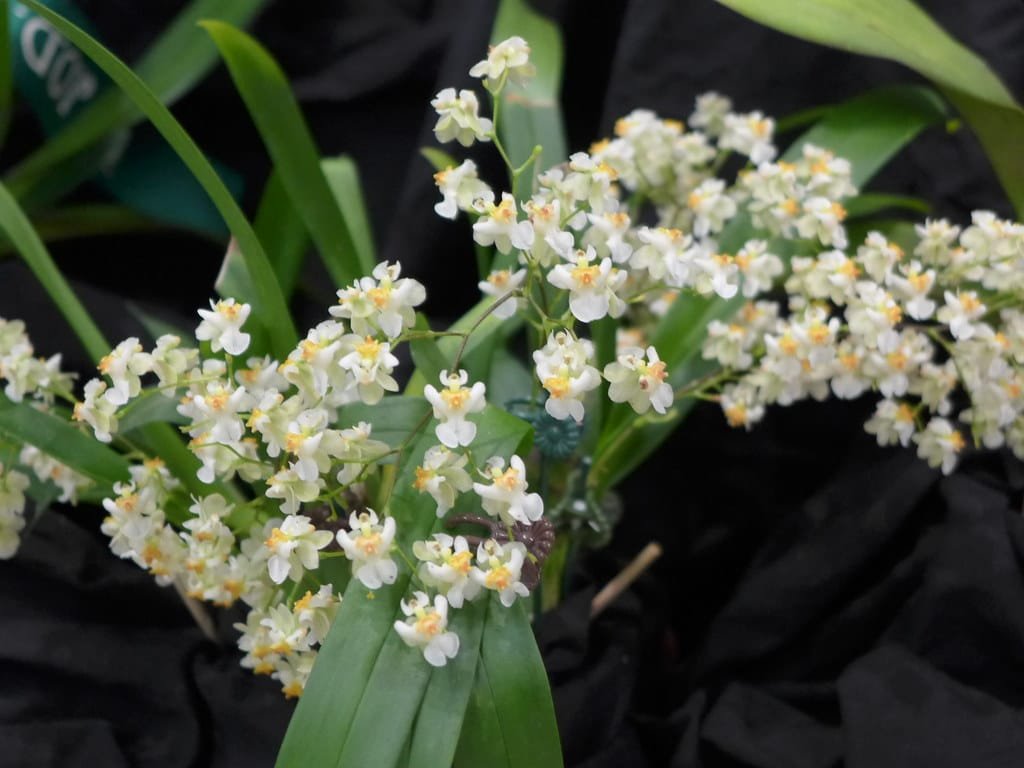
Oncidium Tiny Twinkle 'Jasmim'€18.50

Talk to us to find out when it is back, or let us suggest an alternative.
In the wild, almost all Oncidium orchids are epiphytes, growing on tree branches where they cling with their thick roots. There they enjoy plenty of fresh air and shelter from intense heat.
They like medium to high light. This varies a little depending on the species, but as a guide, look at the leaves: if they are a dark green without any shine, they need more light; if they have an orange tint, that is a sign of sunburn, so reduce the light. The ideal is a glossy green.
Provide a temperature of between 15 and 23°C during the day, with a drop of 6 to 8°C at night. In other words, they prefer relatively cool temperatures.
Like most orchids, Oncidium prefer humidity of around 70%. If you grow them on a windowsill, you may need to place them on a humidity tray.
They do not like to dry out, so water them as the medium approaches dryness. These orchids love air around their roots, so use a substrate mix that will not suffocate them. You can place pieces of broken roof tile in the middle so that there are gaps for air to circulate.
Shortly after flowering, some orchids need a dry rest. If yours drops its leaves, this is a sign that you have a species with this characteristic. During this period, water only as much as needed to stop the pseudobulbs from shrivelling, but as soon as new growth starts to appear, you can resume normal watering.
The most important advice, then, is: provide cool temperatures by day and by night, plenty of air circulation around the roots, and do not let them dry out, except during their dry rest period.
News from our greenhouse in Fernão Ferro, for people who grow with passion.
By subscribing, you accept our Privacy policy. You can unsubscribe at any time.