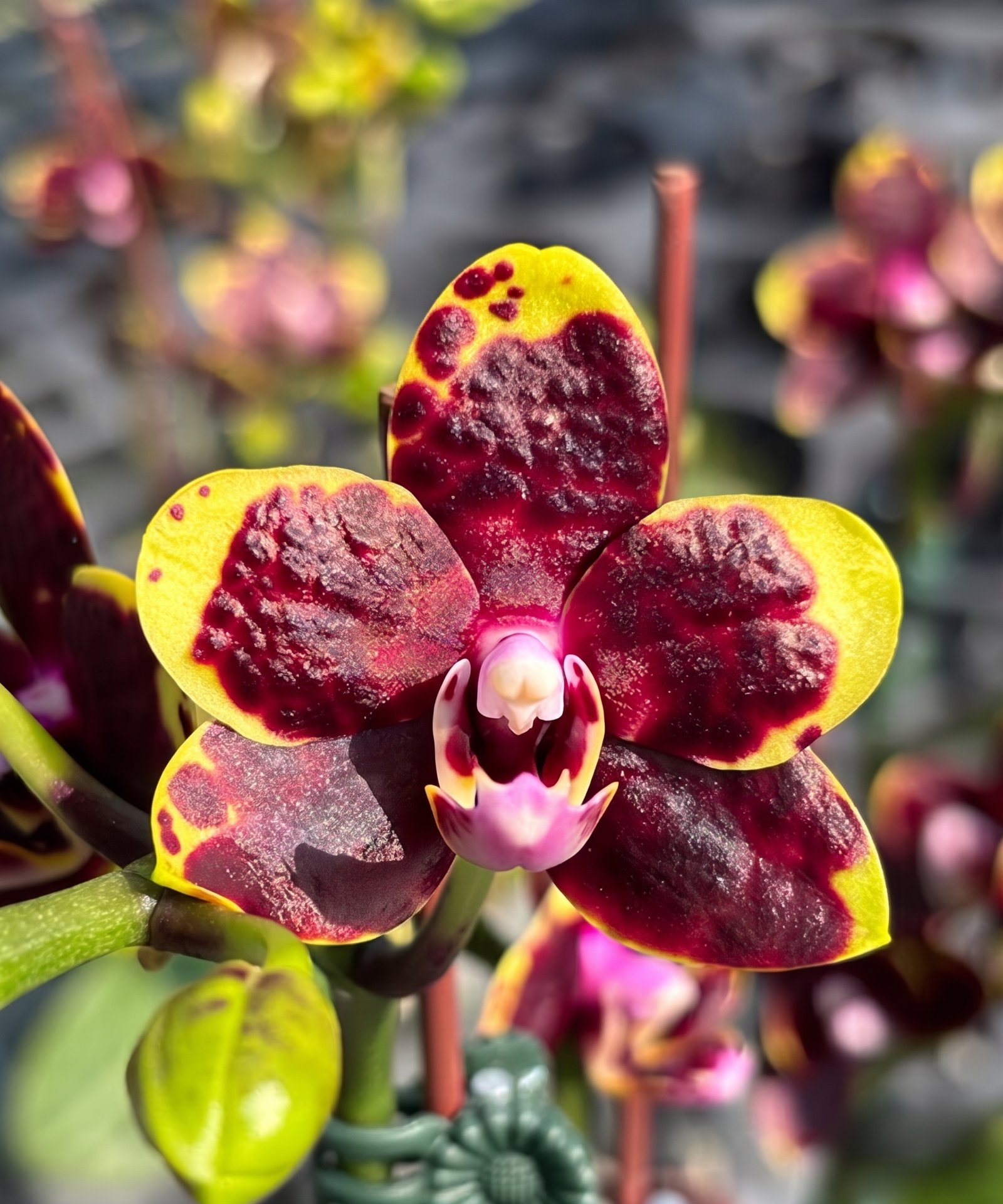
Phalaenopsis
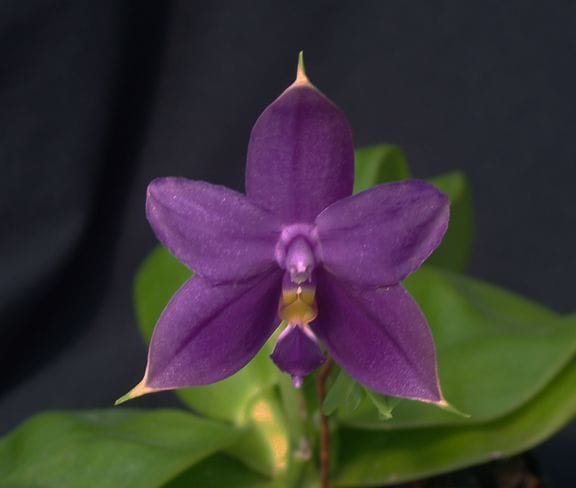
Phalaenopsis Miki Book Boy€29.90


Talk to us to find out when it is back, or let us suggest an alternative.
The Phalaenopsis, also known as the moth orchid, so in this article I will go into a little more depth on how to care for Phalaenopsis orchids and the most common questions from beginners.
If you have bought or been given a Phalaenopsis as a gift, you are quite likely to have questions such as:
These orchids are native to south-east Asia, but today there are thousands of hybrids produced by humans, many of which are quite different from the wild species.
In any case, the care is the same for all of them; in fact, most varieties have been bred to be easy to grow for beginners at home.
In the wild, Phalaenopsis grow as epiphytes, that is, attached to tree trunks. When grown at home, they should not be planted in soil, but rather in a pot with a mix of substrates such as coconut husk, pine bark or other good-quality materials. This is important because these substrates provide ideal drainage and air circulation for the roots.
As the substrates age and decompose, the roots run the risk of suffocating, as they no longer allow air circulation and drainage. For this reason, it is necessary to repot them every 2 or 3 years. This applies to most of these orchids.
They have monopodial growth, that is, there is a central stem that supports leaves growing upwards in alternating fashion, unlike sympodial orchids, which grow sideways. As a result, Phalaenopsis rarely outgrow the size of the pot with their roots.
As they have no pseudobulbs or other means of storing water, they do not like to dry out completely. For this reason, it is best to water them as the substrate approaches dryness, which usually means roughly once or twice a week.
The most common reason these orchids die in the hands of beginners is overwatering, so do not keep them wet all the time, as the roots may rot and attract diseases and pests.
To water your Phalaenopsis, take it to the sink and let the water flow freely through the whole substrate and drain out through the bottom of the pot.
Another method is to submerge the pot in water until the substrate stops bubbling. Avoid wetting the upper part of the plant, so that water does not get trapped in any crevice and cause unnecessary rot.
You can feed it once a week by dissolving the fertiliser in the water you use for watering, for example. This is important so that the orchids grow stronger and healthier.
When the flowering period ends, the flower spikes that were holding the flowers may bloom again in the coming years, provided they stay green. If they turn brown, however, it will be necessary to prune them.
They need low light. For many orchids this might be too little, but for them it is sufficient. You can grow it on the windowsill of a window facing east or south, lightly shaded by a thin curtain. Direct sunlight is a terrible idea, as it will cause serious sunburn. If the plant does not flower and the leaves are dark and soft, you need to increase the light level.
They prefer temperatures ranging from moderate to warm, around 21 to 30ºC during the day, with a drop at night of between 6 and 8ºC. In general, the temperature that is comfortable for you will also be comfortable for it.
Most Phalaenopsis grow best with humidity of around 70%. To achieve this, you can use a humidity tray if necessary.
News from our greenhouse in Fernão Ferro, for people who grow with passion.
By subscribing, you accept our Privacy policy. You can unsubscribe at any time.