Bulbophyllum
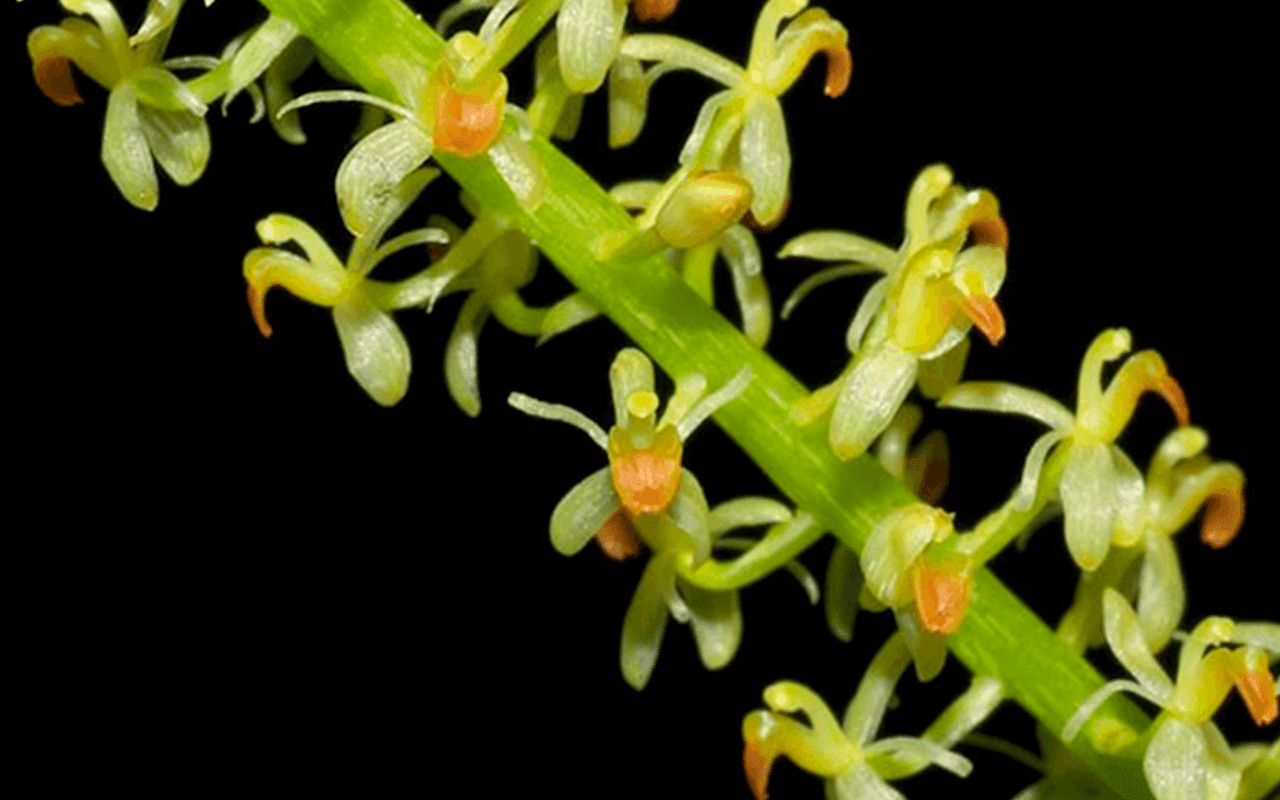
Bulbophyllum falcatum€22.00
Talk to us to find out when it is back, or let us suggest an alternative.
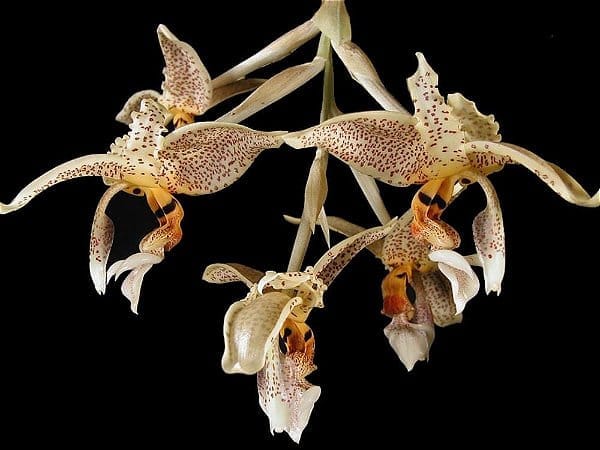
The Stanhopea oculata is one of the most extraordinary and fascinating epiphytic orchids in the plant kingdom, native to the humid forests of Central and South America. Known internationally for its spectacular and complex blooms, this species stands out for its unique habit of sending its flower spikes downwards, piercing the substrate and emerging at the base of the pot. For this reason, the Stanhopea oculata must be grown in hanging baskets made of mesh or wood, allowing its pendent flower racemes to develop in all their splendour.
The flowers of the Stanhopea oculata are true masterpieces of nature: they have a distinctive waxy texture, yellowish to creamy tones covered in purplish speckles and two dark, characteristic spots at the base of the labellum that resemble "eyes" (hence the scientific name oculata). Beyond its exotic and dramatic appearance, this orchid gives off an intense, sweet fragrance that perfumes the entire room. Having a Stanhopea oculata in your collection guarantees a truly unforgettable botanical spectacle with every flowering.
Despite its highly exotic appearance, the Stanhopea oculata adapts very well to home cultivation or in a cool/temperate greenhouse in Portugal, provided its humidity and ventilation needs are respected.
The Stanhopea oculata prefers semi-shaded conditions with plenty of bright light, but without direct exposure to the strong midday sun, which could scorch its delicate foliage. A spot with filtered light (such as beneath a tree canopy or under shade cloth at 50–70%) is ideal for keeping the leaves healthy and encouraging the formation of flower buds.
This species prefers intermediate to warm temperatures during the growing season (18°C to 28°C), tolerating drops down to 12°C in winter during its relative rest period. Good air circulation is essential to prevent fungal problems on the foliage and to ensure the health of the root system.
During spring and summer (the active growing period), the Stanhopea oculata requires frequent watering and high ambient humidity (60% to 80%). The substrate should be kept lightly moist, never waterlogged. In winter, reduce how often you water, allowing the growing medium to dry out slightly between waterings, but without letting the pseudobulbs shrivel excessively.
The key to success when growing the Stanhopea oculata lies in the container and the substrate. It should be planted exclusively in wooden slatted baskets, open plastic or synthetic xaxim, properly lined with natural coconut fibre. The recommended substrate should be light and airy, made up of medium-grade pine bark, coconut fibre and perlite, ensuring perfect drainage and clear passage for the flower spikes to emerge from below.
To promote the formation of new pseudobulbs and ensure strong leaves during spring, apply the Orchid Focus Grow fertiliser regularly. Once the pseudobulbs mature and the plant prepares to produce its pendent flower spikes, switch to Orchid Focus Bloom to strengthen the buds and maximise the intensity of the fragrance and colours.
Explore these and other specialist nutrition solutions in our section on fertilisers and nutrition for exotic plants. To deepen your botanical knowledge and consult the official taxonomic classification of the genus Stanhopea, you can visit the Royal Horticultural Society (RHS) website.
Add the Stanhopea oculata to your collection and enjoy one of the most fascinating and fragrant floral experiences in the world of orchids!
News from our greenhouse in Fernão Ferro, for people who grow with passion.
By subscribing, you accept our Privacy policy. You can unsubscribe at any time.