Dracula sodiroi
Dracula sodiroi: The Elegant Bell-Flowered Orchid for the Iberian Peninsula
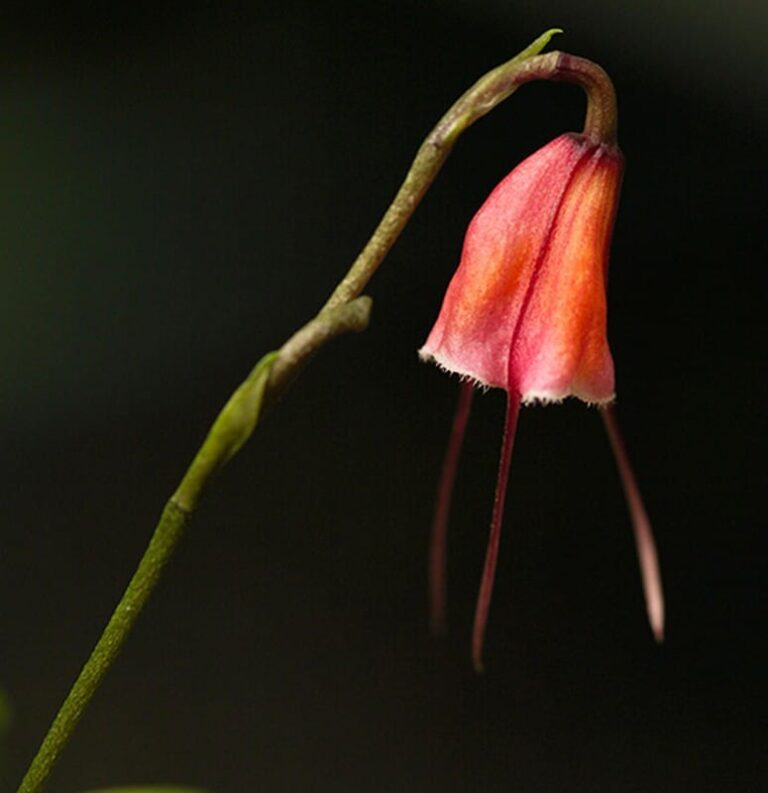
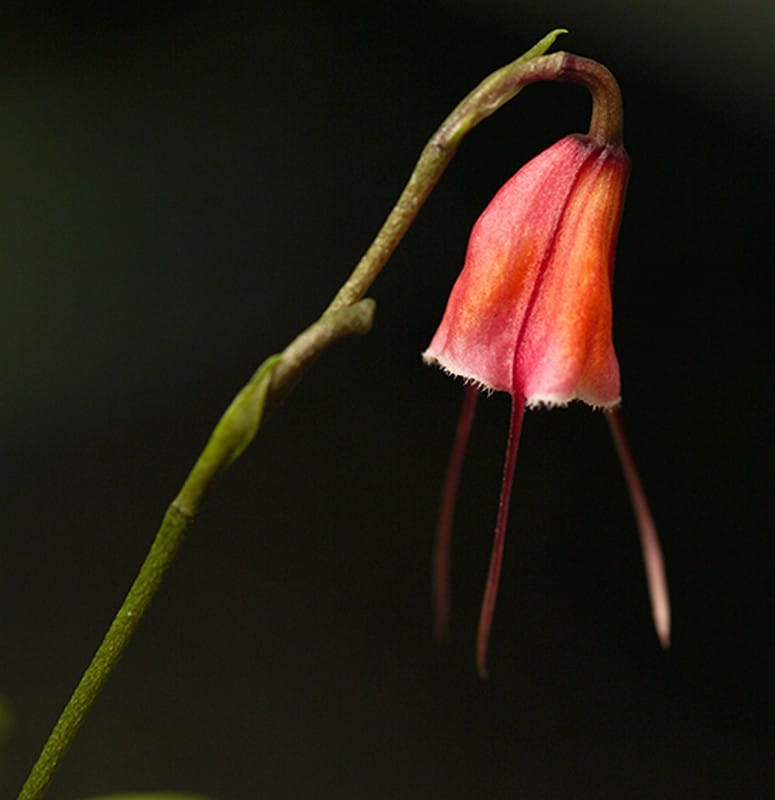
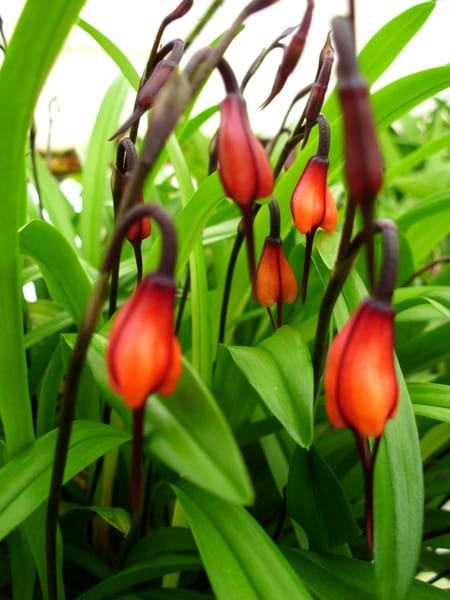
If the world of high-altitude orchids fascinates you, Dracula sodiroi is a truly extraordinary species. Unlike other species in the genus Dracula, known for their exotic faces and downward-growing spikes, this jewel of the Ecuadorian Andes surprises with its upright spikes. It also boasts delicate bell-shaped flowers in a vibrant brick-orange colour.
In this complete guide from our Orchid Encyclopaedia, we take an in-depth look at this botanical species. Likewise, we explain how to overcome the greatest challenge of growing it: keeping temperatures cool during the summers of the Iberian Peninsula.
Species Fact Sheet
Scientific Name: Dracula sodiroi (Schltr.) Luer
Origin: High-altitude cloud forests of Ecuador (1,500m to 2,400m)
Growth Habit: Compact epiphyte or lithophyte (no pseudobulbs)
Flower Colours: Brick-orange, coral and terracotta shades
Flower Morphology: Pendant bell-shaped flowers (pendant bell-shaped)
Temperature: Cool to intermediate-cool (strictly a highland species / highland)
Light: Moderate shade to weak filtered light
🌸 What Makes Dracula sodiroi So Unique?
Dracula sodiroi differs significantly from the classic pattern of its genus for several botanical reasons.
Firstly, it stands out for its upright spike growth. While most Dracula require basket pots because the flowers grow downwards through the substrate, D. sodiroi produces firm, vertical spikes that rise above the foliage.
Secondly, it has a multi-flowered inflorescence. Each spike can produce two to four bell-shaped flowers that hang gracefully at the top.
Finally, it is worth highlighting the absence of pseudobulbs. For this reason, the plant has no water-storage organs. Consequently, its thin, fleshy leaves depend on constant moisture at the roots to survive.
🌿 Step-by-Step Growing Guide
As a native of the Andean cloud forests, Dracula sodiroi requires you to recreate a cool, humid and constantly airy environment.
1. Light
Dracula sodiroi grows in the dense understorey. It therefore needs moderate shade to soft light.
Avoid direct sunlight at all costs, as it scorches the leaves within minutes. In addition, a deep emerald-green tone in the foliage indicates that the lighting is just right.
2. Temperature (The Critical Factor)
This is a strictly cold to cool climate species. Temperature control in summer is therefore vital.
The ideal range is between 12ºC and 20ºC during the day. By contrast, night-time temperatures can and should drop to 8ºC - 12ºC. However, sustained temperatures above 25ºC cause serious stress and may lead to leaf drop.
3. Watering and Substrate
As for watering, the substrate should be kept constantly moist, but never waterlogged. As the plant has no water reserve, the substrate must not dry out completely between waterings.
For the ideal substrate, use 100% high-quality sphagnum or a mix of chopped sphagnum with fine pine bark and perlite. This ensures moisture retention without losing aeration.
🇪🇸 🇵🇹 Growing Dracula sodiroi in the Iberian Peninsula
The great challenge of growing this Andean orchid in the Iberian Peninsula is coping with summer heatwaves. Here is how to adapt your cultivation to your geographical area:
Atlantic Coast / North ➔ Ideal summer climate; watch out for extreme winter cold
Continental / Inland Climate ➔ Focus: Summer cooling and humidity control
South and Mediterranean South ➔ Focus: Full protection against heat and dry air
1. Atlantic Zone and North (e.g. Galicia, Northern Portugal, Asturias, Cantabria)
In these regions, summers are mild and cool, which greatly favours the growth of Dracula sodiroi.
As a result, during the warm months, cultivation is relatively simple outdoors in a shady spot. However, during harsh winters, protect it from frost by keeping it in a sheltered, well-ventilated environment.
2. Continental and Inland Climate (e.g. Castile and León, Madrid, Inland Alentejo)
The great challenge in this zone lies in the extremely hot, dry summers, combined with very cold winters.
Thus, during summer, it is essential to bring the plant into an air-conditioned space or a cool cellar. In addition, use humidifiers or misting systems to keep relative humidity above 70%.
3. Mediterranean Zone and South (e.g. Andalusia, Algarve, Valencian Community)
In these areas, the intense summer heat can be fatal if strict precautions are not taken.
Therefore, ensure an air-conditioned environment or a cool greenhouse microclimate during the peak months. In addition, maintain constant fan ventilation to prevent bacteria from developing on wet leaves.
💡 Golden Tip: The Secret of Ventilation and Quality Water
Dracula sodiroi is extremely sensitive to the build-up of mineral salts in the substrate.
For example, watering with limescale-rich tap water will quickly burn the root tips. For this reason, always use rainwater, demineralised water or reverse osmosis water. Likewise, keep a small fan gently circulating the air around the plant to prevent leaf rot.
❓ Frequently Asked Questions (FAQs)
1. Can I grow Dracula sodiroi in an ordinary pot?
Yes! Unlike other species in the genus Dracula, sodiroi produces upright flower spikes. Consequently, it can be grown in traditional plastic or clay pots with drainage holes, with no need for hanging baskets.
2. Why do the leaf tips turn yellow and fall off?
Generally, this symptom results from temperatures that are too high, air that is too dry or a build-up of salts from the watering water. Make sure you lower the temperature and use pure water.
3. When is the best time to repot?
Repotting should be done in autumn or early spring, when temperatures are cooler and the plant resumes active growth.
🟢 Conclusion
Dracula sodiroi is one of the most rewarding species for enthusiasts of miniature and high-altitude orchids. Although it demands dedication to control the temperature during the Iberian summer, its vibrant bell-shaped flowering amply rewards all the grower's care.