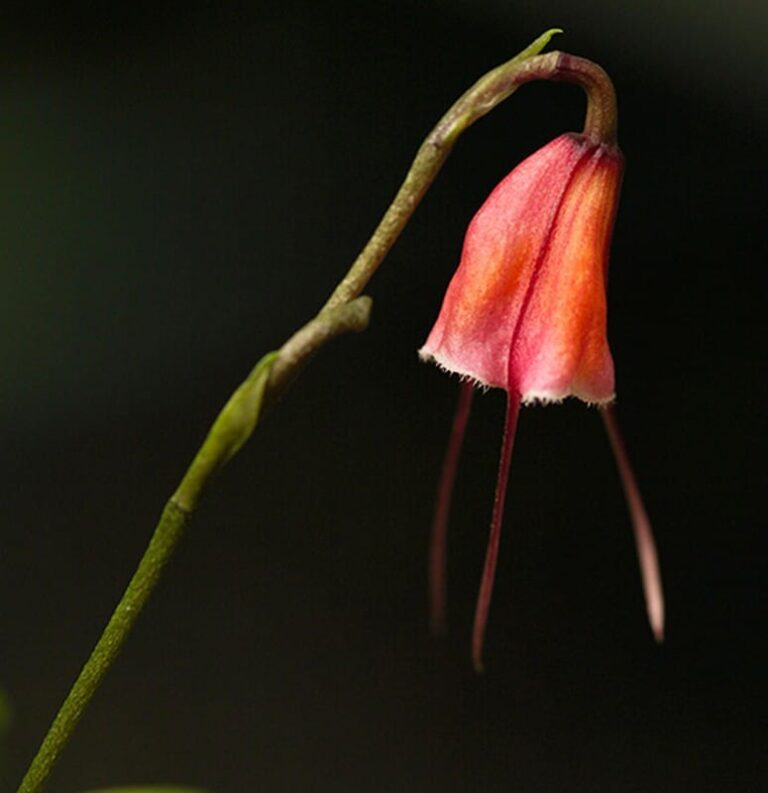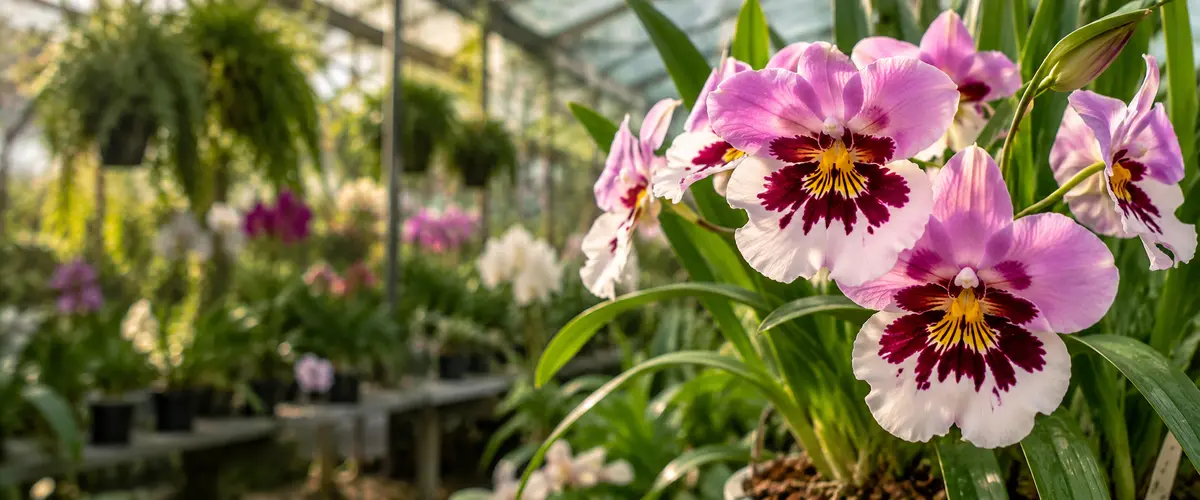
Monnierara Millennium Magic ‘Witchcraft’ FCC/AOS
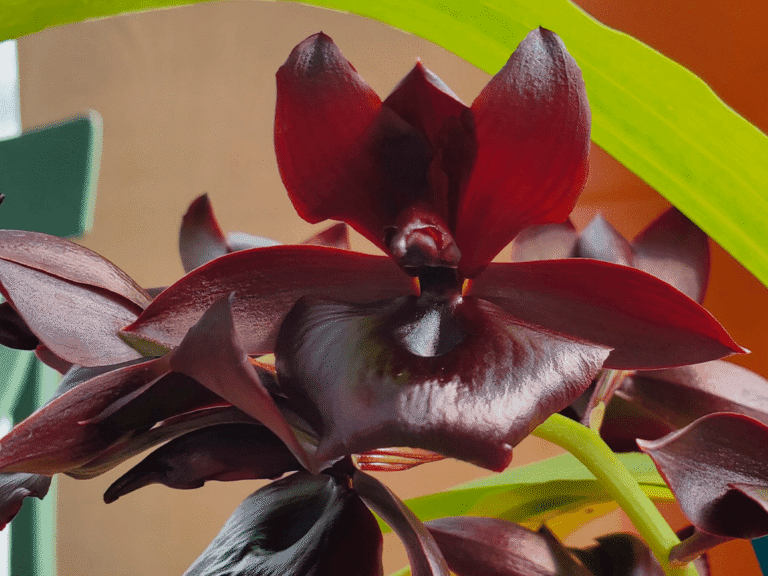
Monnierara Millennium Magic ‘Witchcraft’: The Black Orchid of the Iberian Peninsula
Few orchids in the world inspire as much fascination and mystery as Monnierara Millennium Magic ‘Witchcraft’ FCC/AOS.
Famous for its flowers of a deep, velvety black — something extremely rare in the plant kingdom — and for its sweet, citrusy fragrance, this plant is every collector's dream.
In this complete guide, we explore the origin of this extraordinary hybrid, its growing secrets and how to adapt it successfully to the varied climates of the Iberian Peninsula.
Scientific classification
ParameterBotanical / Growing Detail
Scientific Name: Monnierara Millennium Magic ‘Witchcraft’ FCC/AOS
Hybridisation: Complex intergeneric hybrid (Catasetum × Cycnoches × Mormodes)
Growing Group: Catasetinae alliance
Flower Colours: Intense, velvety black with a yellow/greenish callus (centre)
Life Cycle: Deciduous (loses its leaves during the winter rest)
Light: Medium to high light (filtered) during growth
AwardFCC/AOS: (First Class Certificate of the American Orchid Society)

🖤 The Secret of the "Black Orchid"
Monnierara is a remarkable hybrid belonging to the Catasetinae group.
The "black" tone of its petals is, in fact, an extraordinarily dense concentration of deep red and purple pigments (anthocyanins), which reveal an incomparable velvety texture in direct light.
Another fascinating feature of the group is its distinctive growth cycle:
Active Growth Phase (Spring/Summer): Produces large pseudobulbs and pleated leaves that grow very quickly.
Flowering (Autumn/Winter): Sends up upright flower spikes with dozens of long-lasting flowers.
Dormancy (Winter/Early Spring): Loses all its leaves and enters a complete rest before the new cycle.
🌿 Step-by-Step Guide: The Golden Rule of Cultivation
Growing Catasetinae comes down to one simple but essential rule: strictly respect the watering and dormancy periods.
1. Spring (The Awakening) When the new shoot appears at the base of the pseudobulb, do NOT water immediately.
Wait until the new roots are at least 3 to 5 cm long and well established in the substrate.
Watering too early can rot the new shoot.
2. Summer (Explosive Growth)Once the roots are established, the plant becomes an insatiable "heavy drinker and eater".
Water abundantly and apply a balanced fertiliser (e.g. NPK 20-20-20) frequently.
Provide good indirect light and excellent ventilation.
3. Autumn (Flowering)The plant produces its coveted spikes of black flowers.
Gradually reduce watering as the leaves begin to yellow and fall.
4. Winter (Total Dormancy) Once the plant has lost all its leaves, stop watering almost 100%.
The plump pseudobulb stores all the water and nutrients needed to survive until the following spring.

🇪🇸 🇵🇹 Growing Monnierara in the Iberian Peninsula
The Iberian Peninsula has an enormous diversity of microclimates. Here is how to adjust your care according to your region:
1. Atlantic and Northern Zone (e.g. Galicia, Northern Portugal, Cantabria)
Challenge: Cold, very wet winters.
Solution: During winter dormancy, make sure the plant is kept somewhere completely dry and sheltered from the rain.
Cold combined with damp substrate is fatal.
2. Continental and Inland Climate (e.g. Castile, Madrid, Inland Alentejo)
Challenge: Large temperature swings, very cold winters and extremely dry summers.
Solution: In winter, protect the plant indoors or in a heated greenhouse (recommended minimum temperature above 12ºC). In summer, increase the humidity around the pot during the active growth phase.
3. Mediterranean and Southern Zone (e.g. Andalusia, Algarve, Levante, Islands)
Challenge: Very intense sun and heat in summer.
Solution: Use 50% to 60% shade netting in summer so the soft leaves do not burn. Watering can be daily on the hottest days of high summer.
Ideal Substrate and Pots
Because it grows quickly and needs a lot of water in summer, the substrate should retain moisture without compacting:
Recommended Mix: Medium pine bark + sphagnum (for retention) + clay pebbles or perlite (for aeration).
Reservoir Technique: Many Iberian growers use plastic pots with a small layer of water at the bottom (or trays) only during the hot summer months, removing it completely in autumn.
Frequently Asked Questions (FAQs)
1. Is the flower really 100% black?
In normal light, the flower looks completely black. When exposed directly to the sun or held against a strong light source, you can see glimmers of an extremely dark wine or purple shade.
2. Is it normal for my plant to lose all its leaves in winter?
Yes, it's perfectly normal! This is a deciduous species. Leaf loss is the sign that the plant has entered its natural rest period (dormancy).
3. When is the best time to repot?
Repotting should be done in early spring, as soon as the new shoot begins to emerge, but before the roots grow too long and attach themselves to the old substrate.