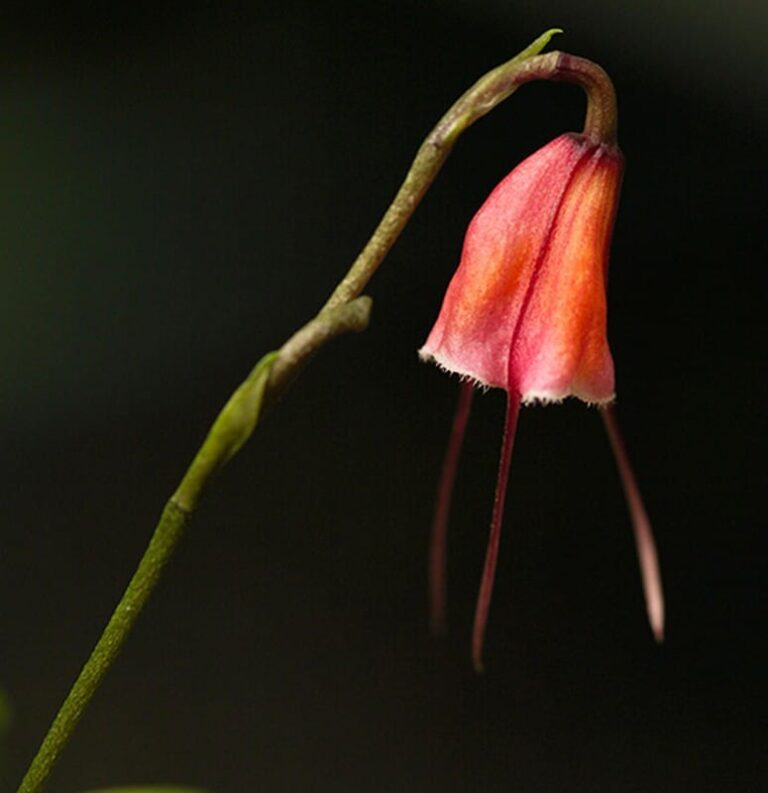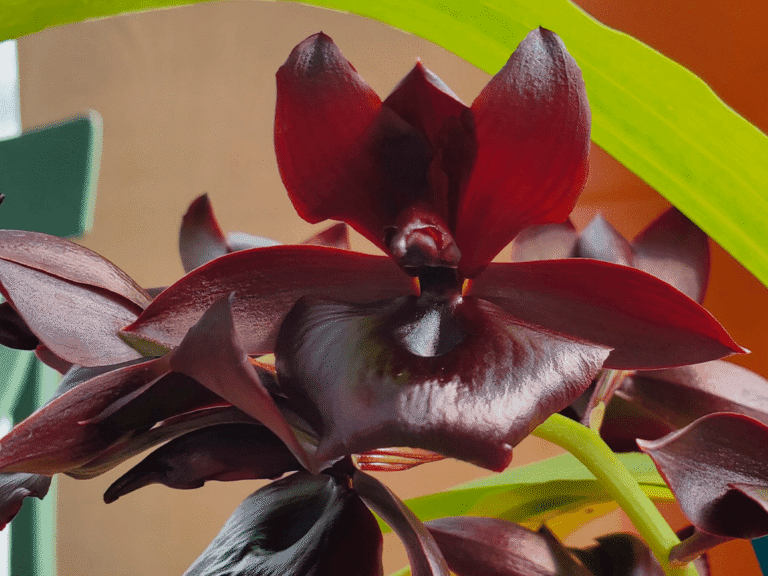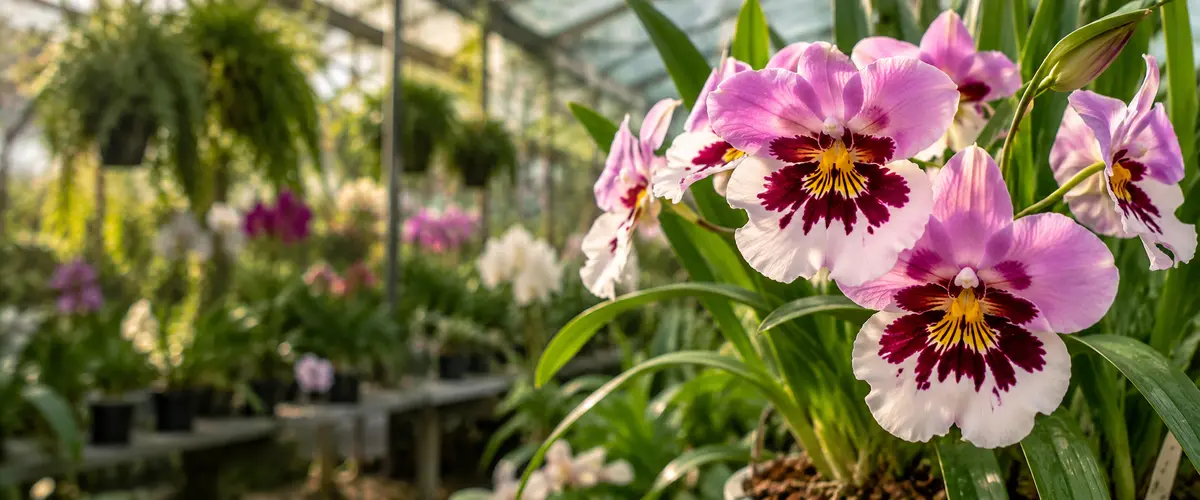
Phalaenopsis bellina

Phalaenopsis bellina: The Fragrant Queen of Botanical Orchids in the Iberian Peninsula
If you are used to the commercial hybrids found in garden centres, Phalaenopsis bellina will completely change your perception of this genus.
Native to the tropical forests of Borneo, this pure species stands out for the exotic beauty of its lime-green and violet flowers.
It is also famous for its sweet, citrusy fragrance, which can perfume an entire room.
In this complete guide from our Orchid Encyclopaedia, we explore the botanical characteristics of this species.
We also explain how to provide the ideal conditions in the different microclimates of the Iberian Peninsula.
Species Fact Sheet
Scientific Name: Phalaenopsis bellina (Rchb.f.) Christenson
Origin: Island of Borneo (Malaysia and Indonesia)
Growth Habit: Compact epiphyte (monopodial growth)
Flower Colours: Lime-green/whitish sepals and petals with a violet/magenta centre
Fragrance: Intense, sweet and citrusy (reminiscent of lemon and lily of the valley)
Temperature: Warm to very warm (strictly lowland / lowland)
Spike Behaviour: Sequential and long-lasting (the spikes stay alive and flower again)

🌸 What Makes Phalaenopsis bellina So Unique?
Unlike large-flowered hybrid Phalaenopsis, bellina has very specific characteristics that every grower should know.
Firstly, it stands out for its sequential flowering. The plant produces one or two flowers at a time per spike. However, the same flower spike can remain active and produce new flowers for several consecutive years. Therefore, never cut a green spike on this species!
Secondly, its foliage is succulent and wavy. The leaves are noticeably broader and glossier, and show a characteristic light green colour.
Finally, it is worth highlighting its unmistakable fragrance. Unlike the vast majority of commercial hybrids, which have no scent, bellina gives off a striking fragrance. Its aroma peaks in the mornings and during the warmest hours.
🌿 Step-by-Step Growing Guide
As an orchid from warm, humid forests, its success depends on a balance of three factors: warmth, humidity and ventilation.
1. Light
Phalaenopsis bellina enjoys moderate to filtered light, similar to common Phalaenopsis.
Therefore, avoid direct sun completely, as it easily scorches its tender leaves. Also, observe the colour of the foliage: leaves with a light lettuce-green tone indicate suitable lighting, whereas very dark leaves signal a lack of light.
2. Temperature (The Critical Factor)
This is a strictly warm-climate species. Temperature management is therefore essential.
The ideal range is between 22ºC and 30ºC during the day. On the other hand, the absolute minimum should not drop below 16ºC. Prolonged cold causes serious thermal shock and can lead to root rot.
3. Watering and Substrate
As for watering, the substrate should be kept slightly moist, but never waterlogged. Unlike Catasetinae, this orchid does not go through dormancy. Consequently, it needs constant moisture throughout the year.
For the ideal substrate, combine medium-fine grade pine bark with a good proportion of sphagnum moss. Also, add perlite or clay pebbles (LECA) to ensure good aeration around the roots.

🇪🇸 🇵🇹 Growing Phalaenopsis bellina in the Iberian Peninsula
The great challenge of growing this jewel of Borneo in the Iberian Peninsula is the transition from autumn to winter. Here is how to adapt your care according to your region:
[ Atlantic Coast / North ] ➔ Focus: Raising the temperature in winter
[ Continental Climate / Interior ] ➔ Focus: Combating dry air and cold nights
[ South and Mediterranean South ] ➔ Focus: Shading in summer and ambient humidity
1. Atlantic Zone and North (e.g. Galicia, Northern Portugal, Asturias)In these regions, winters are cold and long, with high relative humidity.
For this reason, in winter it is essential to keep it indoors, preferably in a heated room. Additionally, reduce the watering frequency when temperatures drop, as excess water combined with cold causes rapid root rot.
2. Continental Climate and Interior (e.g. Castile and León, Madrid, Inland Alentejo)
The great challenge here is the harsh winters and extremely dry summers, made worse by the use of heating or air conditioning.
So, during winter, use room humidifiers or trays with clay pebbles and water near the plant. However, make sure the pot does not touch the water directly. In summer, increase watering and mist around the pot to maintain humidity.
3. Mediterranean Zone and South (e.g. Andalusia, Algarve, Valencian Community, Islands)
In these areas, the main challenge is the high temperatures and intense sun during summer.
Although the plant enjoys the warmth of these regions, it requires strict protection from direct sun. Therefore, use shade netting and ensure good air circulation on the hottest days to prevent fungi and bacteria.
💡 Golden Tip: Heating Mats and Indoor Greenhouses
For those living in areas of the Iberian Peninsula where indoor temperatures drop below 16ºC in winter, there are excellent alternatives.
For example, you can use a plant heating mat underneath the pot.
Likewise, growing the plant in a small terrarium or indoor greenhouse is a very effective solution.
This way, you guarantee the ideal root temperature all year round.
Frequently Asked Questions (FAQs)
1. Should I cut the flower spike when the flowers fade?
No! As Phalaenopsis bellina flowers sequentially, the same spike can produce new flowers the following season. Therefore, you should only cut the spike if it dries out completely and turns brown.
2. What is the difference between Phalaenopsis bellina and Phalaenopsis violacea?
Although they are very similar, bellina has slightly larger flowers and broader upper tepals. It also has a more pronounced lime-green tone and a more citrusy fragrance, whereas violacea tends towards pink tones and floral notes.
3. When is the best time to repot?
Repotting should be done in early spring. During this period, the plant resumes active growth and starts to produce new green root tips.