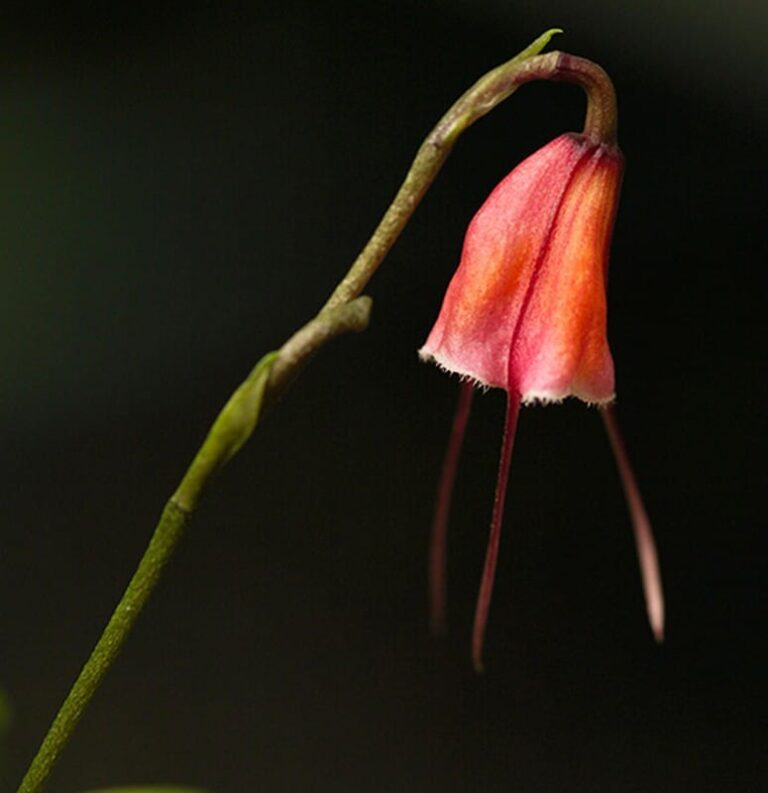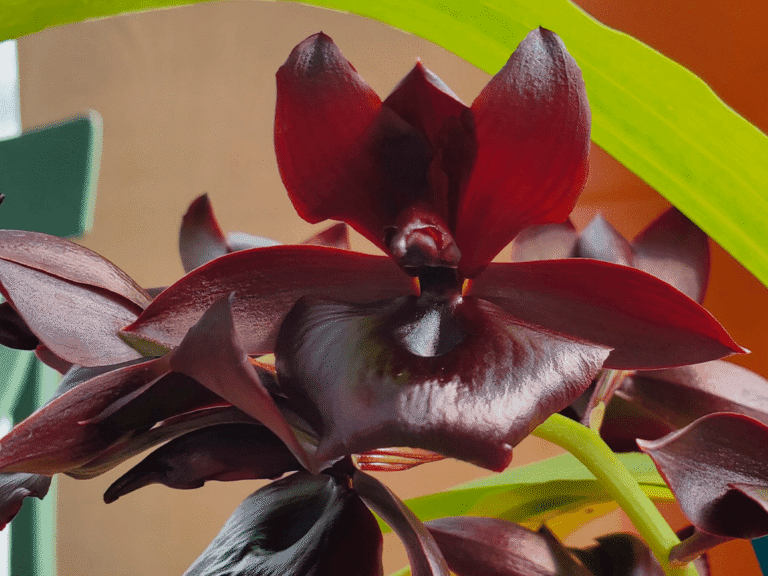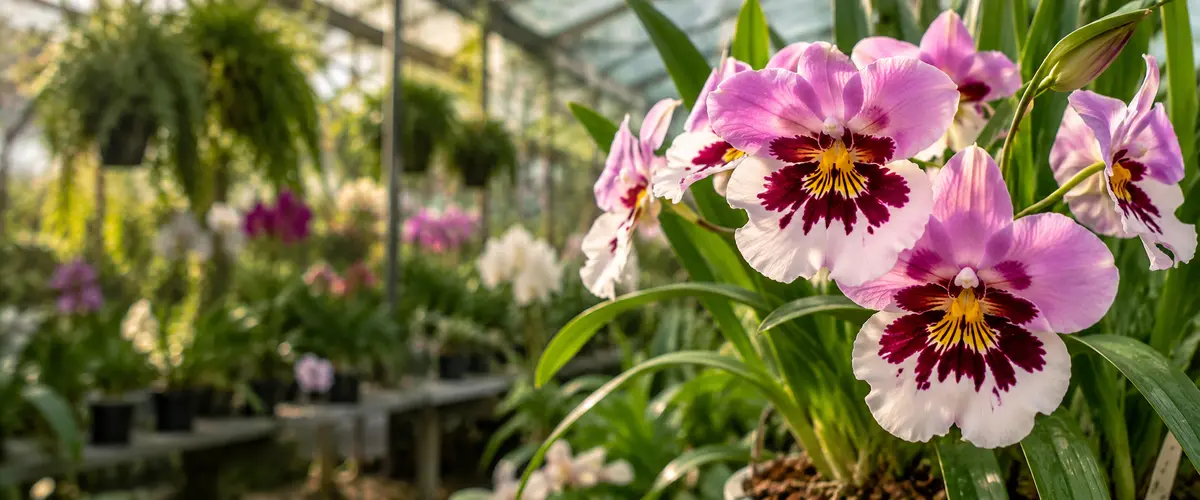
Trigonidium obtusum

Trigonidium obtusum
Trigonidium obtusum: a masterpiece of orchid evolution
The world of orchids is one of the most fascinating in the plant kingdom.
With more than 28,000 described species, the Orchidaceae family displays an extraordinary diversity of forms, colours and survival strategies.
Among them, Trigonidium obtusum stands out as a species little known to the general public, but extremely prized by botanists and collectors.
Its unique floral architecture, combined with its rarity in cultivation, makes it a true botanical jewel.
Each flowering is a spectacle of natural evolution and shows how millions of years of adaptation can result in one of the most curious flowers on the planet.
Scientific classification
Kingdom: Plantae
Division: Magnoliophyta
Class: Liliopsida
Order: Asparagales
Family: Orchidaceae
Subfamily: Epidendroideae
Tribe: Cymbidieae
Subtribe: Maxillariinae
Genus: Trigonidium
Species: Trigonidium obtusum
This classification shows the evolutionary closeness of the species to several South American genera that have sophisticated pollination strategies.
Geographical distribution
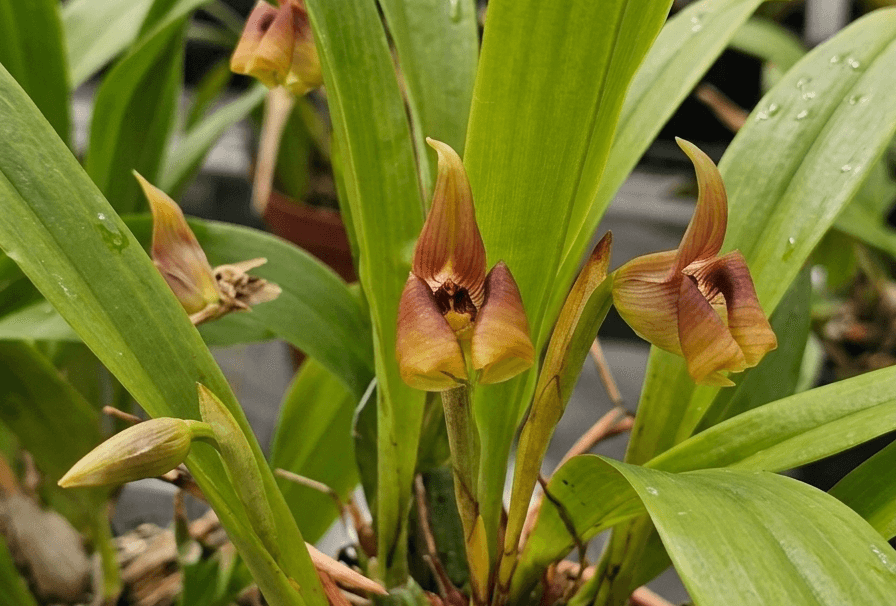
Trigonidium obtusum occurs naturally in tropical regions of South America, where it grows on tree trunks in humid, well-preserved forests.
In these environments, it benefits from moderate temperatures, high atmospheric humidity and light filtered through the tree canopy, ideal conditions for its development.
Genetics shaped by millions of years of evolution
Orchid genetics is considered one of the most complex among flowering plants.
Trigonidium obtusum belongs to the subtribe Maxillariinae, a group known for its high genetic diversity and its ability to develop extremely specific adaptations over the course of evolution.
Molecular biology studies show that the genes responsible for flower formation have undergone successive evolutionary modifications, allowing the emergence of highly specialised structures.
These adaptations did not arise merely to produce beautiful flowers.
Every detail of the flower performs a precise biological function, from guiding the pollinator to ensuring that the pollen is transported efficiently.
This specialisation makes Trigonidium obtusum an excellent example of coevolution between plants and insects.
The incredible pollination strategy
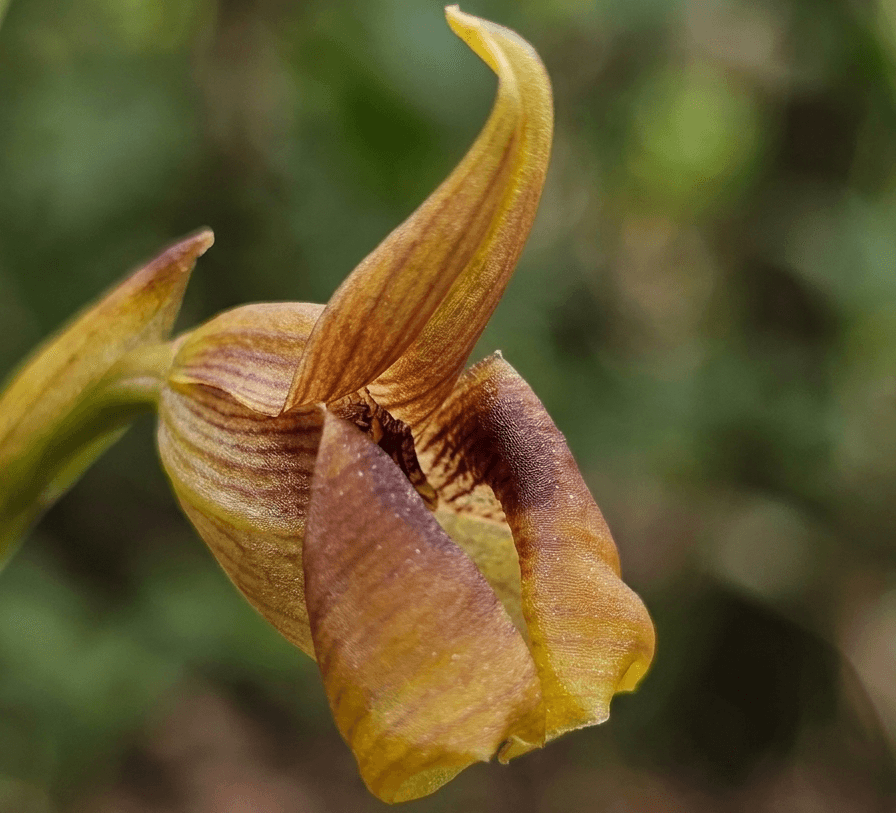
One of the most fascinating features of this species is the way its flowers interact with their pollinators.
The floral geometry creates an almost compulsory path for certain insects, leading them into contact with the plant's reproductive structures.
While searching for food or temporary shelter, the insect ends up carrying the pollinia to another flower, ensuring cross-fertilisation.
This mechanism significantly increases the genetic variability of natural populations.
Plant characteristics
Trigonidium obtusum has:
Sympodial growth.
Well-developed pseudobulbs.
Narrow, tough leaves.
Flowers of exotic appearance.
Colouring that varies between yellow, brown and reddish tones, often with spots and ornamental patterns.
Seasonal flowering that can last several weeks.
How to grow Trigonidium obtusum
Although it is rare, its cultivation follows principles similar to those of many South American species.
Light: It prefers bright indirect light, avoiding direct sun during the hottest hours.
Temperature: Ideally between 16 °C and 28 °C.
Humidity: Between 60% and 80%, accompanied by excellent air circulation.
Watering: The substrate should stay slightly moist during active growth, allowing it to dry out partially between waterings.
Substrate: Medium-grade pine bark, optionally supplemented with charcoal and perlite to improve drainage.
Feeding: Balanced feeding during the growth phase promotes vigorous plants and more abundant flowering.
Why is it so rare?
Unlike many hybrid orchids produced on a large scale, Trigonidium obtusum remains present mainly in specialist collections.The difficulty of commercial propagation, combined with its limited availability in the wild, makes this species a plant highly sought after by experienced collectors.
Conservation
Like countless tropical species, it depends directly on the preservation of native forests.
Habitat destruction is one of the greatest threats to wild populations.
Therefore, buying plants legally produced by specialist nurseries helps to reduce the pressure on specimens in the wild and contributes to the conservation of biodiversity.
Curiosities
The genus Trigonidium is known for its unusual flowers.Many species remain little studied.
It is considered an excellent plant for botanical collections.Its rarity arouses great interest among researchers and orchid enthusiasts.
Conclusion
Trigonidium obtusum shows how evolution can create extraordinary forms of life.
More than an ornamental plant, it represents a botanical heritage of enormous scientific and ecological value.
Its genetics, morphology and pollination strategies make this species a reference for anyone who appreciates the incredible diversity of the Orchidaceae family.
At Tropical Orchids Portugal, we believe that getting to know these species is also a way of contributing to their appreciation and conservation.
Each new flowering reminds us of the importance of protecting tropical ecosystems and promoting responsible cultivation.